

Lingual Braces in Dubai: How They Work and Who They May Suit

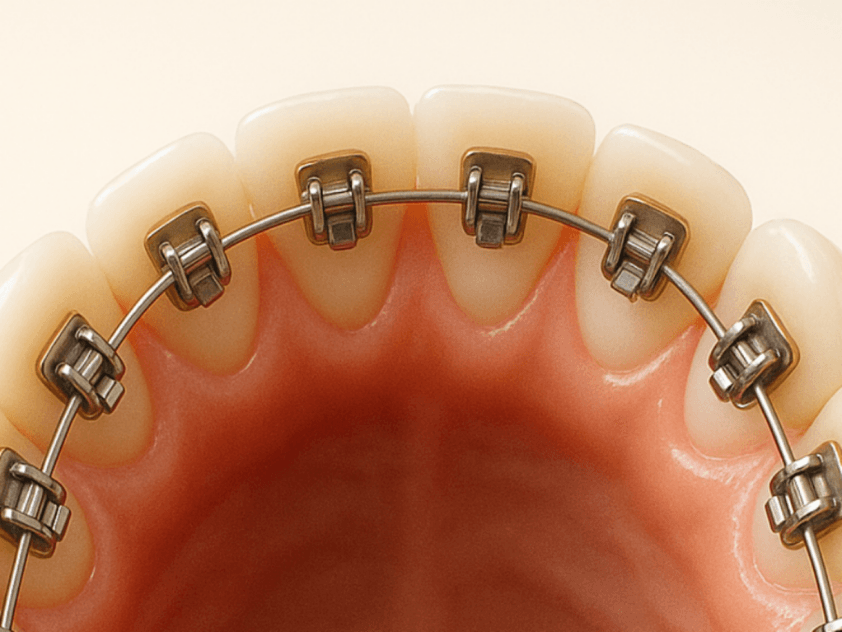
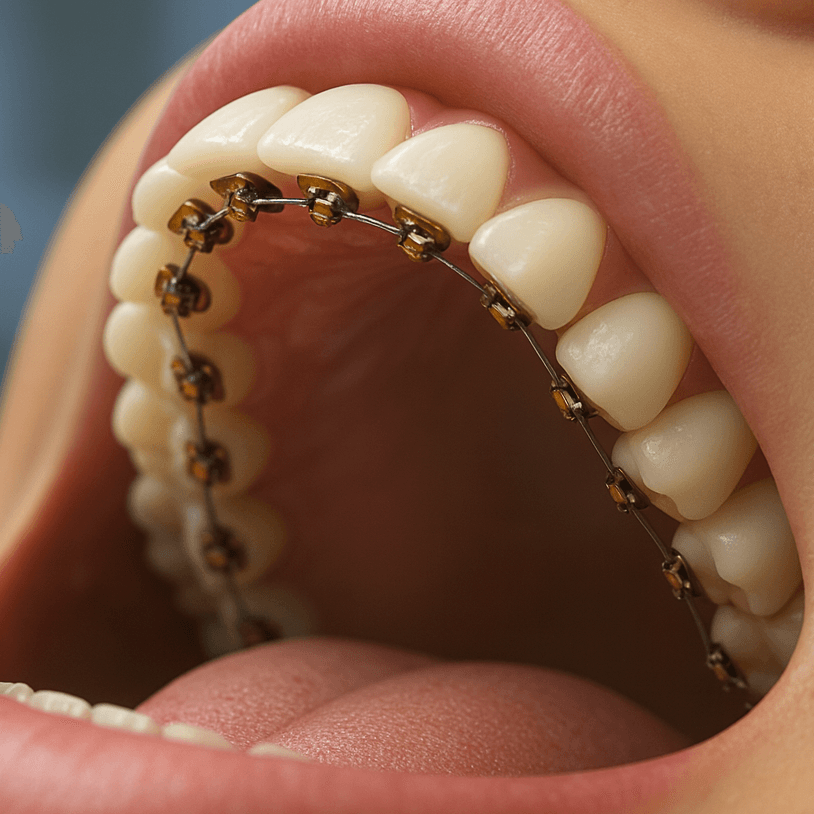
Lingual braces are fixed braces placed behind your teeth instead of on the front. Because the brackets sit behind your teeth, they are hidden from normal front view when you smile or speak. That can make lingual braces appealing if you want a fixed-brace option that is very discreet from the front.

They are not the right option for every treatment plan. Your orthodontist will need to check your teeth, bite and the movements required before deciding whether lingual braces are suitable for you.

You may also come across the name Incognito. Incognito is one specific lingual-braces system — it is not another name for lingual braces in general.

Want to explore your options? See our fixed-braces guide, compare braces with Invisalign, or check our braces cost guide for current pricing guidance.

LumiQuest provides independent dental guidance. We do not provide orthodontic treatment or publish public provider rankings.

Smiling adult representing lingual braces treatmentClinical view of lingual braces positioned behind the teeth

What Are Lingual Braces?

Lingual braces work much like other fixed braces, but there is one important difference: the brackets and wires sit behind your teeth instead of on the front.

Brackets and wires behind the teeth

The brackets are attached to the tongue-side surfaces of your teeth and connected by wires. Because the braces stay fixed in place during treatment, you do not take them in and out yourself.

Your orthodontist plans how your teeth and bite need to move and makes adjustments as treatment progresses.

The important question is not whether lingual braces are “better.”

It is whether placing the braces behind your teeth works well for the treatment you need and for the practical things that matter to you.

Close-up showing lingual braces attached behind the teeth

What Does “Incognito Braces” Mean?

You may hear the name Incognito when looking into lingual braces. The simplest way to think about it is this: lingual braces are the treatment category, while Incognito is one named system within that category.

Lingual braces are the category; Incognito is a named system

Lingual braces

“Lingual braces” describes fixed braces that are placed behind the teeth rather than on the front.

Different lingual-braces systems can be used, depending on the treatment plan and the clinician’s approach.

Incognito

Incognito is one specific lingual-braces system. It is not another name for every type of lingual brace. [3,9]

Who May Be Suitable for Lingual Braces?

Wanting braces that are less noticeable is a perfectly reasonable preference. But the first question is still whether lingual braces can do what your treatment needs them to do.

What suitability depends on

Your orthodontist will look at how your teeth need to move, how your bite needs to be corrected and what the overall treatment plan is trying to achieve.

If having braces behind the teeth is important to you, mention that during the consultation. Your orthodontist can then explain whether lingual braces fit the treatment you need and what practical trade-offs you should know about.

A useful question to ask

“Would lingual braces work well for my treatment plan, and what would I be giving up or gaining compared with the other options?”

What Lingual-Braces Treatment Usually Involves

If lingual braces are a good fit for your treatment plan, the process usually follows the same broad stages as other fixed-brace treatment: assessment, fitting, regular reviews and adjustments.

Assessment and treatment planning

Your orthodontist first needs to understand what is happening with your teeth and bite, what needs to change and what the treatment is trying to achieve.

This is also the right time to ask whether placing the braces behind the teeth changes anything important about your treatment, and what realistic alternatives you have.

Fitting, monitoring and adjustments

Once fitted, lingual braces stay attached during active treatment. You will return for regular reviews so your orthodontist can check progress and make planned adjustments.

There is no single review schedule that applies to everyone. The timing of visits should follow your individual treatment plan and may change as treatment progresses.

If a bracket or wire causes a problem

If a bracket becomes loose, a wire is causing significant irritation, or pain or irritation is severe or persistent, contact the treating team for advice. [1,6]

Do not try to repair the appliance yourself unless the treating team has specifically told you what to do.
What matters most

The treatment plan should explain not just what appliance is being used, but how your progress will be checked, how problems are handled and what to expect between visits.

Living With Lingual Braces

Because lingual braces sit behind your teeth, they can feel different at first from braces placed on the front. Most of the day-to-day questions come down to speech, eating and keeping the appliance clean.

Speech and tongue adaptation

Because the braces sit where your tongue normally moves, you may notice temporary changes in your speech while you get used to them. Your tongue can also feel sore or irritated where it touches the appliance. [4,5]

Everyone adapts differently, so there is no single timeline that applies to every patient.

When to contact the treating team

If discomfort is severe or does not settle, or if a sharp or loose part of the appliance is causing significant irritation, contact the treating team rather than trying to adjust it yourself.

Eating with fixed braces

Lingual braces are fixed to your teeth, so some hard or sticky foods can put extra stress on the brackets and wires. [1,6]

You may need to change how you eat certain foods, but there is no universal food list that suits every appliance.

Keep it simple

Follow the instructions given for your particular braces and ask what to avoid, what can be cut into smaller pieces and what is fine to eat normally.

Cleaning behind the teeth

Cleaning around lingual brackets needs extra attention because the appliance sits on the inside surfaces of your teeth. [5]

Ask the treating team to show you how they want you to clean around the brackets and wires and which cleaning tools are appropriate for your appliance.

Worth asking at your fitting

“Can you show me exactly how to clean around these brackets and which areas I should pay particular attention to?”

The practical side matters too

If you are considering lingual braces because of how discreet they are from the front, also ask what the early adjustment period may be like for speech, tongue comfort, eating and cleaning.

How Do Lingual Braces Compare With Other Low-Visibility Options?

Lingual braces, ceramic braces and clear aligners can all make orthodontic treatment less noticeable, but they do it in different ways. The biggest differences are where the appliance sits and whether it stays fixed in place or can be removed.

Ceramic braces
Ceramic braces
Placement On the front of the teeth
Type Fixed
From the front The brackets sit on the visible front surfaces of the teeth
Daily routine Stays fixed in place
Clear aligners / Invisalign
Clear aligners
Placement Clear trays over the teeth
Type Removable
From the front The clear trays sit over the teeth
Daily routine Removed and replaced during the day
Ceramic braces
Placement On the front of the teeth
Type Fixed
From the front The brackets sit on the visible front surfaces of the teeth
Daily routine Stays fixed in place
Clear aligners / Invisalign
Placement Clear trays over the teeth
Type Removable
From the front The clear trays sit over the teeth
Daily routine Removed and replaced during the day
There is no automatic winner

Start with the options that are appropriate for your treatment. Then compare where the appliance sits, how visible it is from the front and how it fits into your day-to-day routine.

Lingual vs ceramic braces

Both are fixed braces. Ceramic braces are attached to the front surfaces of the teeth, while lingual braces are attached behind them.

If you are comparing the two, think about placement and visibility alongside the treatment plan and the practical care each option requires.

Learn more about ceramic braces →

Lingual braces vs clear aligners / Invisalign

Lingual braces stay fixed behind the teeth. Clear aligners are removable. That difference changes your day-to-day routine, but it does not decide by itself which treatment is more appropriate for you.

If you are deciding between fixed braces and removable aligners, our dedicated comparison looks at that decision in more detail.

Compare braces with Invisalign →

How Long Does Lingual-Braces Treatment Take?

There is no single treatment time that applies to everyone.

How long treatment takes depends on what needs to be corrected and how treatment progresses over time. [1,7]

Your orthodontist should give you an estimate based on your own treatment plan and explain what could make that estimate change.

A useful question to ask

“What is your current estimate for my treatment, and what could make it shorter or longer?”

What Do Lingual Braces Cost in Dubai?

There is no single lingual-braces price that will fit every treatment plan. What matters is understanding exactly what you are being quoted for and what is included.

Compare the quote, not just the headline price

A useful lingual-braces quote should make it clear which system is being proposed, what treatment is planned and whether the quote covers one arch or both.

It should also explain what happens beyond the fitting itself, including monitoring, repairs, retention and any other items that may affect the total cost.

Looking for current braces pricing?

We keep detailed published price guidance and quote-comparison advice in our dedicated braces cost guide.

A useful question to ask

“If I choose this lingual-braces option, what is included in the quoted price and what could I be charged for separately?”

What to Ask Before Choosing Lingual Braces

A good consultation should help you understand not just what lingual braces are, but why they are being recommended for your treatment and what living with them will involve.

Which lingual system are you proposing?

Ask for the exact system name and why it is a good fit for your treatment plan.

How much experience do you have with cases like mine?

Ask about experience treating similar lingual-braces cases using the system being proposed.

Would treatment involve one arch or both?

If this is relevant to your plan, ask why one or both arches are being treated and how that fits the overall correction.

How will progress be checked?

Ask how treatment will be monitored, how often reviews are likely to happen and what would cause the plan to change.

What happens if a bracket or wire causes a problem?

Find out how loose brackets, wire irritation and other appliance problems are handled between planned appointments.

What limitations or alternatives should I understand?

Ask what trade-offs come with lingual braces and what other realistic treatment options were considered for you.

What happens after the braces come off?

Ask what retention plan is expected and what follow-up is likely to be needed after active treatment.

Want a broader way to evaluate orthodontic care?

See our guide on how to choose an orthodontic provider in Dubai for questions that go beyond lingual braces and help you assess the overall consultation, treatment plan and provider.

Retainers After Lingual Braces

When the braces come off, treatment is not quite finished. Retainers are usually used to help keep your teeth in their corrected positions. [8]

Your retention plan should be personal to you

The type of retainer, how often you are asked to wear it and how your teeth are followed afterwards should be based on your individual treatment and retention needs.

Before your braces are removed, ask what retainer is planned, when you will receive it and what you should do if it is lost, damaged or no longer fits properly.

A useful question to ask

“What retainer will I need after treatment, how should I wear it and what follow-up should I expect?”

Want more detail about retainers?

See our retainers and aftercare guide for a deeper look at what happens after active orthodontic treatment.

Lingual Braces FAQs

Still have questions? Here are some of the things people commonly want to know before choosing braces that sit behind the teeth.

Are lingual braces really hidden from the front?

Yes. The brackets sit behind your teeth instead of on the front, so they are hidden from normal front view when you smile.

Are Incognito braces the same as lingual braces?

Not exactly. Lingual braces are the type of treatment. Incognito is one specific lingual-braces system, so not all lingual braces are Incognito braces.

Can everyone have lingual braces?

Not always. Your orthodontist needs to look at your teeth, your bite and the movements needed before deciding whether lingual braces are a good option for your treatment. In some cases, another type of brace or an aligner may make more sense.

Do lingual braces affect speech or irritate the tongue?

They can at first. Because the braces sit close to your tongue, you may notice temporary speech changes or some tongue irritation while you get used to them. If the irritation is severe or does not settle, contact your treating team.

Are lingual braces harder to clean?

They can take a little more care to clean because the brackets sit behind the teeth. Your treating team should show you how to clean around them and which tools are best for your particular braces.

How long does lingual-braces treatment take?

It varies from person to person. Your orthodontist should give you an estimate based on the treatment you need and explain what could make that timeline change as treatment progresses.

What should I do if a lingual bracket or wire comes loose?

Contact your treating team for advice, especially if the loose bracket or wire is uncomfortable or irritating your tongue. Avoid trying to repair it yourself unless they have told you what to do.

About This Guide

This guide is here to help you understand lingual braces, compare your options and prepare better questions before an orthodontic consultation.

Independent guidance for patients

LumiQuest Dental Circle is an independent dental guidance platform. We are not a dental clinic, public ranking or paid-placement marketplace.

Our aim is to make orthodontic information easier to understand so you can have a more useful conversation with the clinician who is assessing and treating you.

This guide does not replace an orthodontic assessment

The right treatment for you depends on your own teeth, bite, treatment goals and clinical assessment.

Evidence approach

Selected clinical claims in this guide were checked against relevant professional guidance and research. The supporting sources are listed below.

Manufacturer information is used only to confirm the current Incognito system name and identity. It is not used to support claims that Incognito is faster, more comfortable, more precise, more predictable or more effective than other treatment options.

Preparing for an orthodontic consultation?

LumiQuest can help you organise the questions to ask and understand your options before your appointment.

Ask LumiQuest for guidance ↓

References

Clinical claims in this guide were selectively evidence-checked against relevant professional guidance and research.

  1. 1
    American Association of Orthodontists. How Do Braces Work? Current professional and patient guidance; controlled source state checked 4 September 2026. American Association of Orthodontists .
  2. 2
    American Association of Orthodontists. Orthodontic FAQs: Your Questions Answered. Current guidance; controlled source state checked 4 September 2026. American Association of Orthodontists .
  3. 3
    British Orthodontic Society. Fixed appliances. Current patient guidance; controlled source state checked 4 September 2026. British Orthodontic Society .
  4. 4
    Chen J, Wan J, You L. Speech and orthodontic appliances: a systematic literature review. European Journal of Orthodontics. 2018;40(1):29–36. DOI: 10.1093/ejo/cjx023 . PMID: 28472259.
  5. 5
    Ata-Ali F, et al. Adverse effects of lingual and buccal orthodontic techniques: A systematic review and meta-analysis. American Journal of Orthodontics and Dentofacial Orthopedics. 2016;149(6):820–829. DOI: 10.1016/j.ajodo.2015.11.031 . PMID: 27241992.
  6. 6
    American Association of Orthodontists. What is an Orthodontic Emergency? 16 February 2026. American Association of Orthodontists .
  7. 7
    British Orthodontic Society. Risks of Orthodontic Treatment — Guidance on Informing Patients. Controlled official guidance; document states updated/reviewed by the BOS Clinical Governance Directorate in 2023; current PDF checked 4 September 2026. British Orthodontic Society .
  8. 8
    Al-Moghrabi D, Littlewood SJ, Fleming PS. Orthodontic retention protocols: an evidence-based overview. British Dental Journal. 2021;230:770–776. DOI: 10.1038/s41415-021-2954-7 .
  9. 9
    Solventum. 3M™ AlastiK™ Lingual Ligatures. Current official product page checked 4 September 2026. Used only to verify the current 3M™ Incognito™ Appliance System naming and identity. Solventum .
References were selected for the specific clinical claims cited in this guide. Manufacturer information is used only for current product identity or terminology where stated, not to support claims of superior speed, comfort, precision, predictability or treatment outcomes.

Get Clear Guidance to the Right Dentist

Just a couple of minutes — no pressure, no cost, and fully private
One of our advisors will review your request and guide you to a suitable dentist or clinic, usually within 12 hours.

Type your country (e.g., “United Arab Emirates”) or its code (e.g., “+971”), then your number without the area code. WhatsApp only.
Please enter a valid phone number.
Advanced Options (optional)
JPG, JPEG, PNG, PDF, HEIC, WEBP (max 10MB each)