Retainers in Dubai: Types, Wear, Care and What to Do if They Stop Fitting

A retainer helps hold your teeth in their treated positions after braces or clear aligners.

Teeth can move again after active orthodontic treatment, and some tooth movement also happens naturally with age. Retainers reduce that movement, but they cannot guarantee that your teeth will stay in exactly the same position forever. [ 1, 9–11 ]

The practical points are simple:

  • use the retainer according to the plan given for your case;
  • look after it and check that it still fits properly;
  • get advice if it is lost, damaged, painful, loose or no longer fits as expected.

There is no single retainer type, wear schedule or replacement interval that is right for everyone.

Why Are Retainers Needed After Orthodontic Treatment?

After orthodontic treatment, teeth can move away from their treated positions. A retainer helps reduce that movement and maintain the result of treatment. [1]

It does not permanently lock the teeth in place. [ 1, 9, 11 ]

Over time

Teeth can also change with age

Not every later change in tooth position means your orthodontic treatment has failed.

Research in people who never had orthodontic treatment also shows that tooth positions and crowding can change over time. [9]

That is one reason long-term retention may be advised when keeping the teeth aligned remains important. Your exact plan should still be based on your own teeth and treatment rather than on one lifelong rule for everybody. [ 9–11 ]
If wear changes

What happens if you stop wearing a removable retainer?

Your teeth may move if effective retention is stopped or greatly reduced. [ 1, 11 ]

There is no reliable way to predict exactly how much movement will happen, which teeth will move or how quickly it will happen for one person.

If you have stopped wearing your retainer and notice a change in fit or tooth position, do not guess what has happened from the fit alone. Ask the treating team what to do next.

What Are the Main Types of Retainers?

The three main designs you are likely to encounter are fixed retainers, clear removable retainers and Hawley retainers.

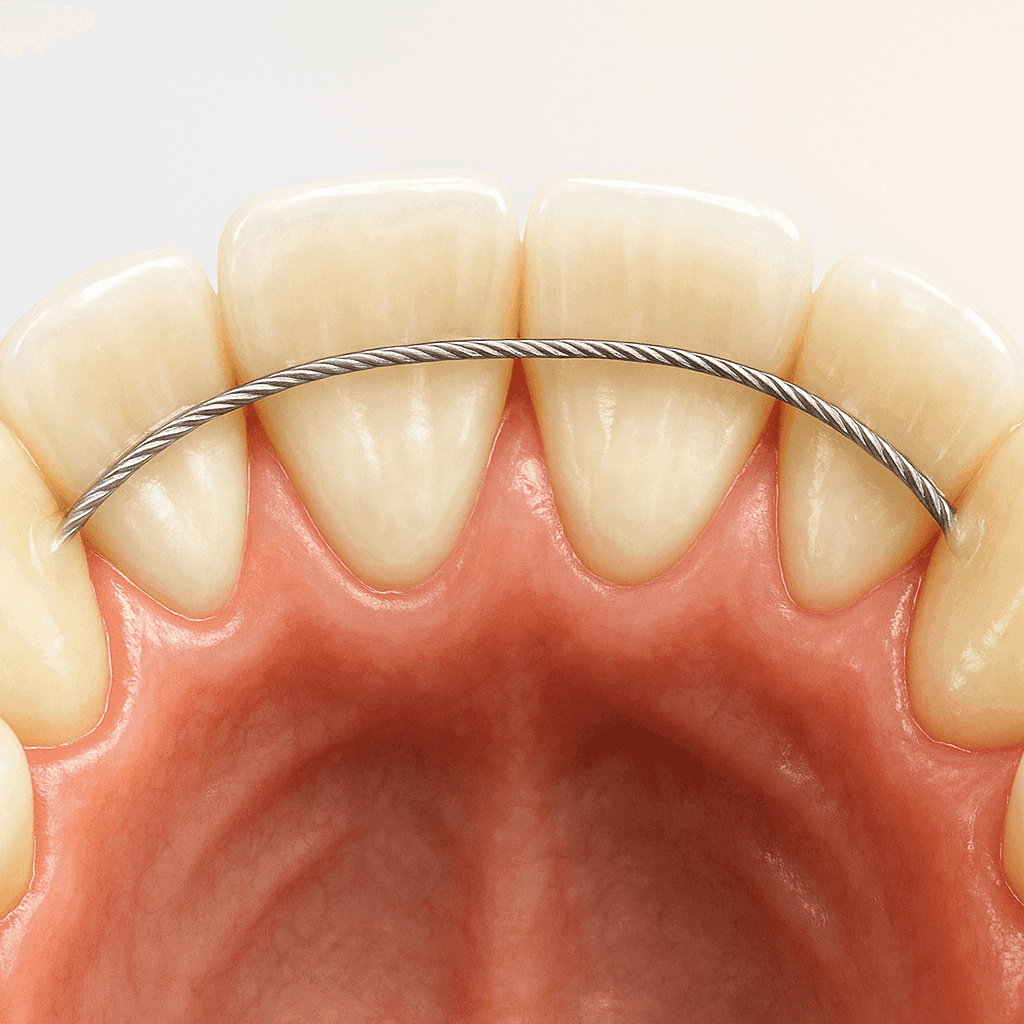
Fixed orthodontic retainer bonded behind the teeth
Fixed

Fixed or bonded retainers

A fixed retainer is usually a wire bonded behind the teeth. It stays in place, so you do not have to remember to insert it every day. [ 10, 11 ]

Day to day, that means:

  • the retainer is always present;
  • cleaning around and underneath the bonded wire needs extra attention;
  • the bonding or wire can come loose or break;
  • you should arrange assessment promptly if that happens. [ 6, 7, 10, 11 ]

A fixed retainer is therefore not maintenance-free.

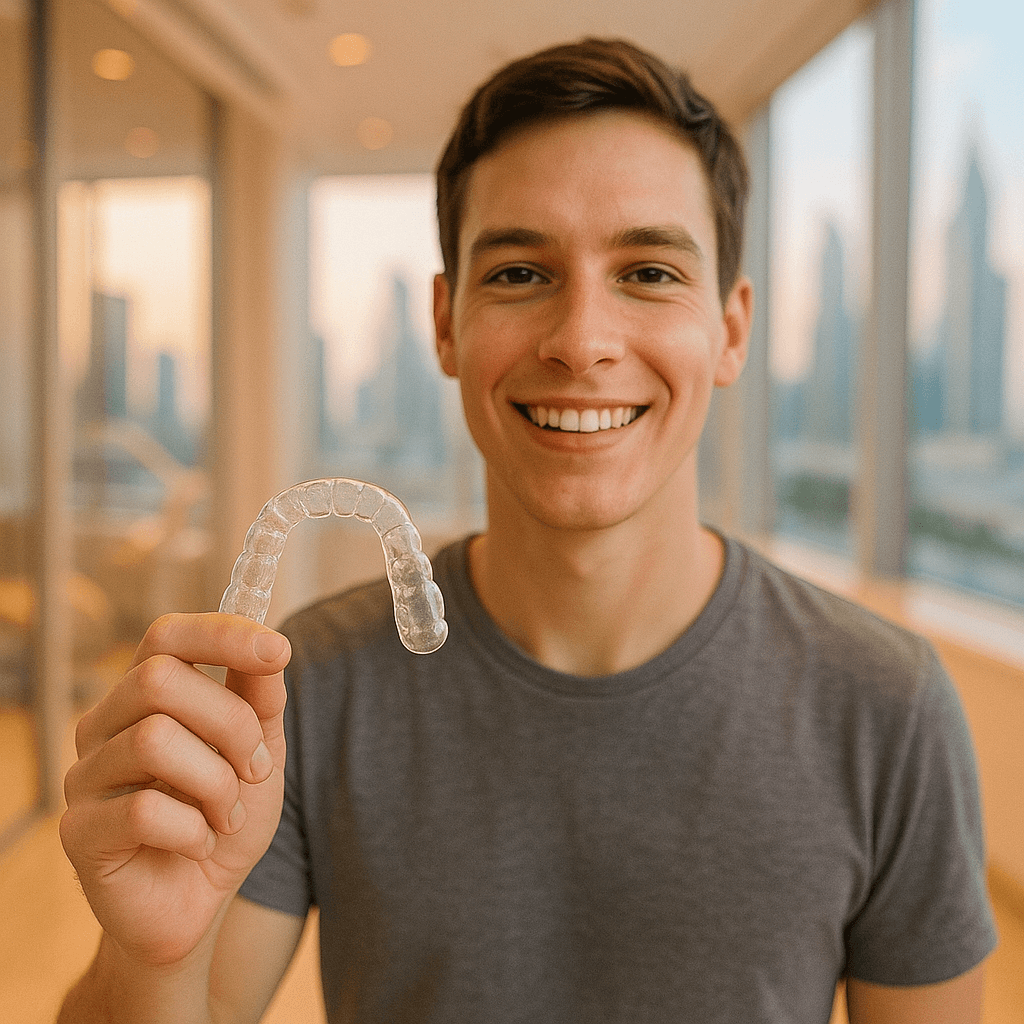
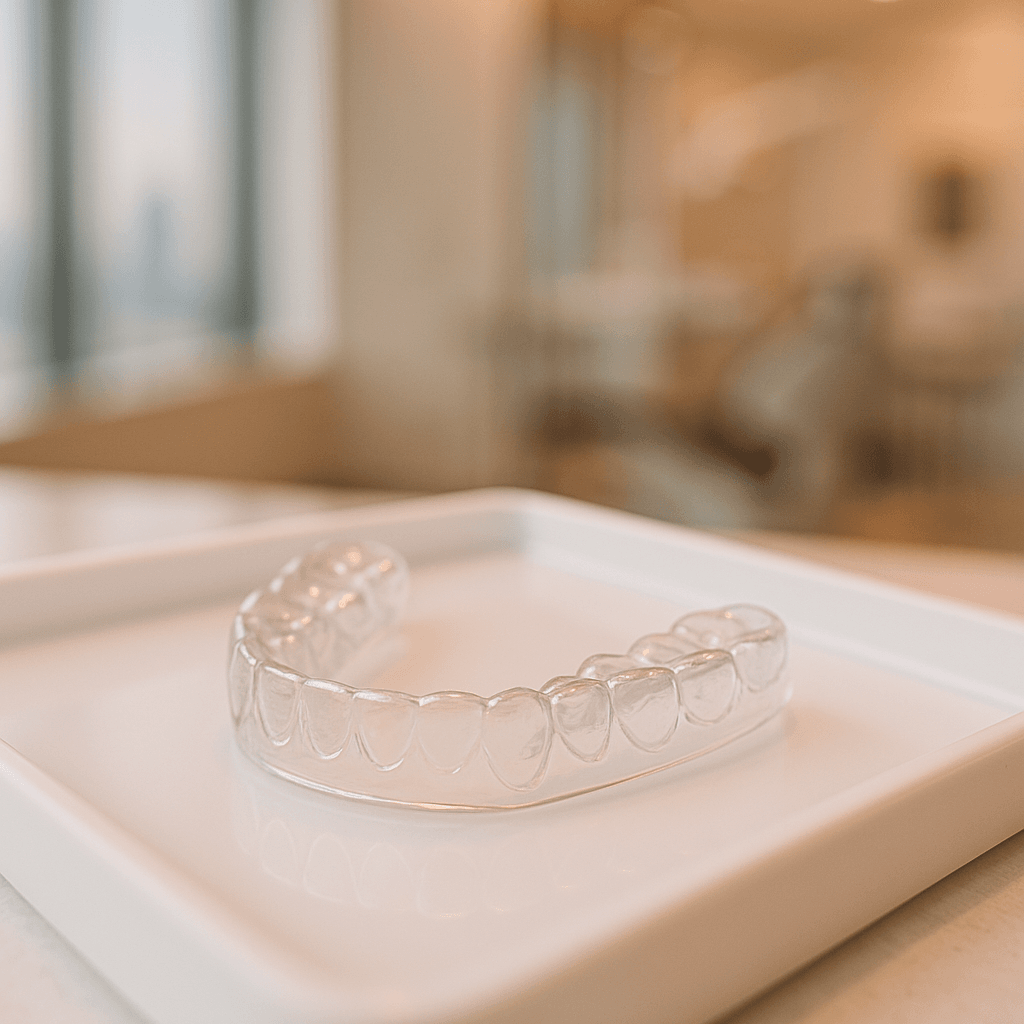
Clear removable orthodontic retainer
Removable

Clear vacuum-formed retainers

A clear vacuum-formed retainer is a removable clear plastic appliance shaped to fit over the teeth. [ 10, 17 ]

Day to day, that means you need to:

  • remember to wear it according to your prescribed schedule;
  • clean it regularly;
  • store it in its protective case whenever you are not wearing it;
  • pay attention if it becomes cracked, warped, painful or stops fitting normally. [ 5, 12–15 ]
You may also come across brand names. Vivera is a branded clear retainer from Align Technology. Essix is a Dentsply Sirona product/material brand used for thermoformed appliances. These are product examples, not proof that one brand is clinically better than another. [ 16, 17 ]
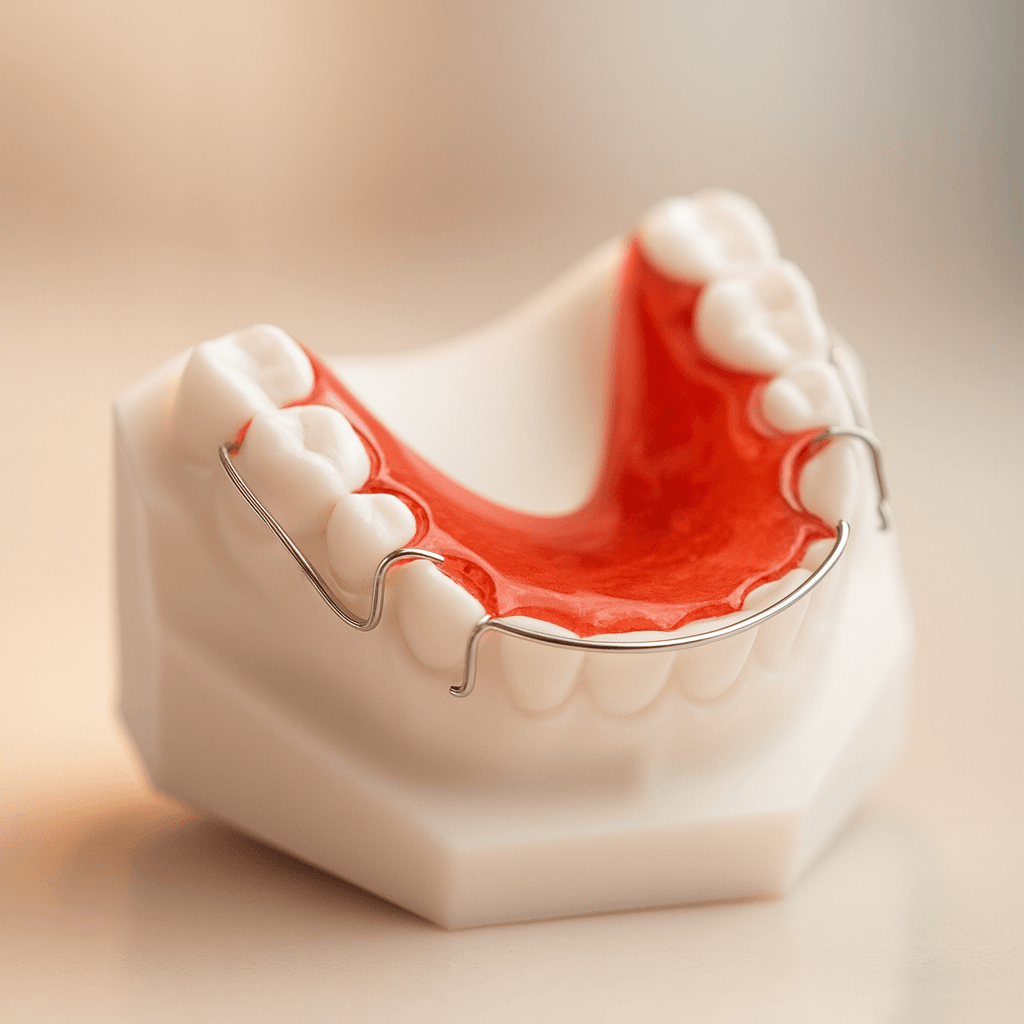
Hawley orthodontic retainer with acrylic base and wire components
Removable

Hawley retainers

A Hawley-type retainer is removable and usually has an acrylic or plastic base with wire components. [ 10, 11 ]

Like other removable retainers, it depends on you wearing it according to the plan prescribed for your case.

Fixed vs Removable Retainers: Is One Better?

No single retainer type has been shown to be best for everyone. [ 1–4 ] What matters more is how the advantages and maintenance needs of each type fit your own case.

Fixed vs removable in daily life

Fixed retainer Removable retainer
Stays attached behind the teeth You put it in and take it out yourself
Does not depend on remembering daily insertion Depends on following the prescribed wear schedule
Needs careful cleaning around and underneath the bonded wire Can be removed for cleaning
Can loosen, debond or break Can be lost, cracked, warped or stop fitting properly
May need repair or rebonding May need repair or replacement depending on condition and fit

Fixed and removable retainers perform differently depending on the teeth being retained, the outcome being measured and how long they are followed. Studies do not show one universal winner. [ 1–4 ]

Do You Need Retainers After Both Braces and Clear Aligners?

Yes. Retention is relevant after both braces and clear-aligner treatment.

We cannot say that everybody needs a different retention protocol simply because they had aligners rather than fixed braces. The direct comparative evidence is too limited for that. [8]

We also cannot assume that exactly the same schedule must always be used after both types of treatment.

Your retention plan should be based on your teeth, the treatment you had and your individual clinical needs.

How Often Should You Wear a Removable Retainer?

Follow the wear schedule prescribed for your own retainer and case.

There is no single number of hours per day, or one “full-time then nights” schedule, that applies to everyone. [ 1, 5, 10 ]

Studies comparing different removable-retainer protocols have not shown that one schedule is universally best. [ 1, 5, 10 ]

If you are unsure what your current instructions are, or whether your schedule should change, ask the treating team rather than changing it yourself.
If you have already reduced or stopped wear and the retainer now feels different, the important question becomes how it fits now, not simply what your old schedule used to be.

How Long Do You Need Retainers?

Retention may be needed for the long term and, in some cases, indefinitely if maintaining the treated tooth positions remains important. [ 9–11 ]

That does not mean everyone should follow the same lifelong wear schedule.

Your retention needs can change over time. The plan should take account of your tooth positions, the type and condition of your retainer and how well it continues to fit.

How Should You Clean and Care for a Retainer?

Person cleaning a removable orthodontic retainer

Removable retainers

For routine care of a removable retainer:

  • rinse it with lukewarm water;
  • clean it regularly—often daily—with a dedicated toothbrush and mild dish soap where appropriate for the retainer material;
  • avoid hot or boiling water, because heat can distort thermoplastic retainers;
  • avoid abrasive toothpaste where it may scratch the retainer surface;
  • do not use bleach, alcohol-based mouthwash or strong detergents to clean it;
  • store it in a protective case whenever you are not wearing it. [ 12, 15 ]
Retainer materials and manufacturer instructions can differ. If the retainer you were given has specific care instructions, follow those as well. [12]

Fixed retainers

For a fixed retainer:

  • brush carefully around the bonded wire and the nearby tooth surfaces;
  • clean between the teeth and underneath or alongside the wire using an interdental method that works with the retainer design;
  • pay particular attention to areas where plaque and calculus can collect. [ 6, 12, 15 ]
Fixed retention can make plaque and calculus control more demanding, but that does not mean fixed retainers inevitably cause severe periodontal harm. [6]
If you are having difficulty getting underneath or around the wire, the dental or orthodontic team can show you how to clean that particular retainer.

What Should You Do if a Retainer Is Lost or Broken?

The safest next step depends on what has happened.

Quick guide: if this happens, what should you do?

If this happens What to do
You lose a removable retainer Contact the treating team promptly rather than waiting for your next routine visit. Teeth may move while retention is interrupted, but there is no universal safe waiting period. [ 11, 14, 15 ]
The retainer is badly cracked or warped Do not simply continue using it as normal. Ask the treating team whether it needs repair or replacement. [ 12, 14 ]
The retainer has a sharp or painful area Do not force or continue normal wear through significant pain. Ask for advice before continuing. [ 12, 14 ]
A fixed retainer comes loose or breaks Arrange assessment promptly. The affected tooth or teeth may begin to move if retention has failed. [11]
The retainer no longer seats fully Do not force it into place. Assessment may be needed to determine whether the problem is with the retainer, its fit or renewed tooth movement. [ 13, 15 ]
The retainer is painful Do not keep forcing it into position. Ask for assessment or advice before continuing normal wear. [ 13, 15 ]
You notice your teeth have moved Arrange reassessment rather than assuming another retainer alone will correct the change. [ 1, 9, 13 ]

If you lose a removable retainer

Contact the treating team promptly rather than waiting for the next routine appointment.

Teeth may move while retention is interrupted, but nobody can give a reliable universal rule such as “your teeth will be safe for X days” or “they will move after X days.” [ 11, 14, 15 ]

The purpose of contacting the team promptly is to decide what should happen next before an avoidable period without effective retention becomes longer.

If a removable retainer is cracked, warped or sharp

A badly damaged, distorted, sharp or painful retainer should not simply be worn as usual. [ 12, 14 ]

Do not try to repair it yourself. The treating team can advise whether the appliance can still be used, needs repair or needs replacement.

If a fixed retainer breaks or comes loose

Arrange assessment promptly.

If part of the bonded wire has detached or broken, the affected tooth or teeth may no longer be held as intended and may begin to move. [11]

The assessment is needed to determine whether the retainer can be repaired or rebonded and whether the teeth have changed position.

What if Your Retainer Feels Tight or No Longer Fits?

A change in fit can mean several different things. The teeth may have moved, the retainer may have distorted, or another fit problem may be present.

If it feels tight

Tightness alone does not tell you exactly what has happened. [ 13, 15 ]

If the retainer still fits normally and is not painful, do not use tightness alone to diagnose relapse.

If it no longer seats properly, the fit has clearly changed or wearing it is painful, do not force it. Contact the treating team so they can determine whether the problem is with the appliance or whether the teeth have moved.

If it no longer seats fully

Do not force it into place. [ 13, 15 ]

Assessment may be needed to distinguish a distorted or damaged retainer from renewed tooth movement or another fit problem.

If it is painful

Do not keep forcing a painful retainer into position.

Ask for advice about whether it should still be worn and whether the retainer, the teeth or both need to be checked. [ 13, 15 ]

What about an old retainer you have not worn for a while?

Do not automatically start wearing an old retainer again if it no longer fits normally or causes pain. [ 13, 14 ]

Its changed fit may reflect a problem with the appliance, movement of the teeth or both. That is why assessment may be needed before routine reuse.

What if Your Teeth Have Already Moved?

A replacement retainer is not always enough if your teeth have already moved by a meaningful amount.

The right next step depends on how much movement has occurred and what the assessment shows. [ 1, 9, 13 ]

The treating team may need to determine whether you need:

  • continued retention;
  • adjustment of the existing retainer;
  • repair or replacement;
  • or renewed active orthodontic treatment.

This does not mean every small change requires treatment again.

The purpose of reassessment is to work out whether the problem is mainly the appliance, whether the teeth have moved enough to change the plan, and whether a retainer alone can still do the job it is intended to do.

How Long Does a Retainer Last?

There is no reliable “replace every X years” rule. Repair or replacement should be based on the retainer's condition, damage and fit, together with clinical assessment—not on the calendar alone. [ 1, 7, 12–15 ]

Signs your retainer may need attention

Ask for advice if:

  • a removable retainer is cracked, warped, sharp or painful;
  • it no longer fits or seats normally;
  • a fixed retainer has loosened, detached or broken;
  • the retainer is visibly worn or damaged;
  • you notice that your teeth have moved. [ 7, 11–15 ]

What Do Retainers Cost in Dubai?

Retainer costs can differ because the reason for treatment can differ.

You may be paying for:

an initial retainer after orthodontic treatment;
replacement of a lost or damaged removable retainer;
repair or rebonding of a fixed retainer;
or reassessment because your teeth have moved.

This page does not publish a generic Dubai retainer price range.

For detailed orthodontic pricing guidance, see Orthodontics Cost in Dubai .

Before paying for a replacement, ask

Useful questions include:

  • Why does this retainer need to be replaced rather than repaired?
  • Does its changed fit mean my teeth should be reassessed before a new one is made?
  • Is the recommendation for repair, rebonding, adjustment or a completely new retainer?
  • What exactly is included in the quoted fee?
  • If my teeth have moved, is the proposed fee for retention only, or is further treatment being considered separately?
  • What should I do if the new or repaired retainer later becomes painful or stops fitting?

These questions help you clarify what is being recommended and what you are paying for. They do not imply that any particular item is normally included in a Dubai retainer fee.

Questions to Ask Your Orthodontic Team

Before or after receiving a retainer, useful questions include:

Which type of retainer are you recommending for me, and why?
What wear schedule should I follow?
When should I ask whether that schedule needs to change?
How should I clean and store this specific retainer?
What should I do if it feels tight, becomes painful or stops seating fully?
What should I do if it cracks, warps, breaks, becomes loose or gets lost?
How will I know if it needs repair or replacement?
What should I do if I notice my teeth moving?
If my teeth have already moved, is retention alone still appropriate?
If you recommend a replacement, why is repair or adjustment not enough?
These questions are intended to help you understand your own retention plan. They are not a provider-ranking checklist.

Retainer FAQs

Why do I need a retainer after braces or clear aligners?

Retainers help hold the tooth positions achieved during active orthodontic treatment. Teeth can move after braces or aligners, and some changes also happen naturally with age. Retainers reduce post-treatment movement but cannot guarantee that your teeth will remain completely unchanged forever. [ 1, 9–11 ]

Which type of retainer is best?

There is no single retainer type that is best for everyone. Fixed, clear removable and Hawley retainers have different practical advantages and maintenance needs. The right choice depends on your teeth, hygiene, maintenance needs, preferences and treatment plan. [ 1–4 ]

How many hours a day should I wear my retainer?

There is no universal number of hours that applies to every patient. Follow the wear schedule prescribed for your own retainer and case rather than relying on one general rule. [ 1, 5, 10 ]

Do I need to wear a retainer forever?

Long-term or indefinite retention may be advised when maintaining alignment remains important, but there is no single lifelong wear schedule that applies to everyone. Your plan should be individualized and may change over time. [ 9–11 ]

What should I do if my retainer feels tight?

Tightness can have more than one cause. If the retainer no longer seats properly or is painful, do not force it into place. Assessment may be needed to determine whether the retainer has distorted, whether the teeth have moved or whether another fit problem is present. [ 13, 15 ]

What should I do if my retainer breaks or gets lost?

Contact the treating team promptly. A lost removable retainer interrupts retention, while a cracked, warped or painful removable retainer or a detached fixed retainer may need repair, replacement or assessment. There is no universal safe number of days to wait. [ 11, 12, 14, 15 ]

Can a new retainer fix teeth that have already moved?

Not always. If the teeth have moved materially, another retainer alone may not be enough. Reassessment may be needed to decide whether the appropriate next step is retention, adjustment, repair or replacement, or renewed active orthodontic treatment. [ 1, 9, 13 ]

How often should retainers be replaced?

There is no universal replacement interval. Repair or replacement should depend on the retainer's condition, damage, fit and the clinical assessment—not simply on how many months or years have passed. [ 1, 7, 12–15 ]

About This Guide

LumiQuest Dental Circle is an independent dental guidance platform.

It may help patients understand options and navigate toward suitable dentists or clinics.

It is not a dental clinic, treatment provider, public provider-ranking directory or paid-ranking marketplace.

This guide is designed to help patients understand orthodontic retention, compare the main retainer types and know what to do if a retainer is damaged, lost or no longer fits.

It does not replace an individualized orthodontic assessment or retention plan.

  • Written by: LumiQuest Editorial Team
  • Clinical review by: Dr. Joe Feghali — Orthodontist and Founder, LumiQuest Dental Circle
  • Clinically reviewed: 12 September 2026

Public References

Clinical claims in this guide were selectively evidence-checked against relevant professional guidance and research.

  1. 1
    Martin C, Littlewood SJ, Millett DT, Doubleday B, Bearn D, Worthington HV, Limones A. Retention procedures for stabilising tooth position after treatment with orthodontic braces. Cochrane Database of Systematic Reviews. 2023;5(5):CD002283.DOI: 10.1002/14651858.CD002283.pub5 .PMID: 37219527 .
  2. 2
    Zhang X, Li Y, Zhang Z, Liu J, Sun Q. Effects of different orthodontic retainers on dental arch stability and periodontal health: a systematic review with pairwise meta-analysis and network meta-analysis. BMC Oral Health. 2026;26:1622.DOI: 10.1186/s12903-026-09123-7 .PMID: 42458363 .
  3. 3
    Hussain U, Kunwar SS, Khan UW, Alnazeh AA, Kamran MA, Alam S, Aziz A, Zaheen M, Pandis N, Campobasso A. Can vacuum-formed retainers maintain arch dimensions and alignment compared to Hawley and fixed bonded retainers after treatment with fixed appliances? A systematic review and meta-analysis. European Journal of Orthodontics. 2024;46(5):cjae040.DOI: 10.1093/ejo/cjae040 .PMID: 39177154 .
  4. 4
    Bellini-Pereira SA, Aliaga-Del Castillo A, Dos Santos CCO, Henriques JFC, Janson G, Normando D. Treatment stability with bonded versus vacuum-formed retainers: a systematic review of randomized clinical trials. European Journal of Orthodontics. 2022;44(2):187–196.DOI: 10.1093/ejo/cjab073 .PMID: 34719722 .
  5. 5
    Kaklamanos EG, Kourakou M, Kloukos D, Doulis I, Kavvadia S. Performance of clear vacuum-formed thermoplastic retainers depending on retention protocol: a systematic review. Odontology. 2017;105(2):237–247.DOI: 10.1007/s10266-016-0254-5 .PMID: 27270920 .
  6. 6
    Arn ML, Dritsas K, Pandis N, Kloukos D. The effects of fixed orthodontic retainers on periodontal health: A systematic review. American Journal of Orthodontics and Dentofacial Orthopedics. 2020;157(2):156–164.e17.DOI: 10.1016/j.ajodo.2019.10.010 .PMID: 32005466 .
  7. 7
    Aye ST, Liu S, Byrne E, El-Angbawi A. The prevalence of the failure of fixed orthodontic bonded retainers: a systematic review and meta-analysis. European Journal of Orthodontics. 2023;45(6):645–661.DOI: 10.1093/ejo/cjad047 .PMID: 37824794 .
    Correction control:2024 correction record, identifier cjae007. European Journal of Orthodontics correction .
  8. 8
    Regalado-Bazán CF, Espichan-Salazar AC, Arriola-Guillén LE. Comparison of relapse of orthodontic treatment following aligner versus conventional fixed appliance treatment. A systematic review. Journal of Clinical and Experimental Dentistry. 2024;16(5):e586–e594.DOI: 10.4317/jced.61520 .PMID: 38988751 .
  9. 9
    Rajbhoj AA, Parchake P, Begnoni G, Willems G, Cadenas de Llano-Pérula M. Dental changes in humans with untreated normal occlusion throughout lifetime: A systematic scoping review. American Journal of Orthodontics and Dentofacial Orthopedics. 2021;160(3):340–362.e3.DOI: 10.1016/j.ajodo.2021.02.014 .PMID: 34456004 .
  10. 10
    Johnston C, Burden D, Morris D; revised by Parvizi F, Morris D, Atack N. Clinical Guidelines: Orthodontic Retention. British Orthodontic Society. Revised 2013. BOS clinical guideline .
  11. 11
    British Orthodontic Society. FAQs. Relevant section: What happens when my braces are removed? British Orthodontic Society. BOS patient FAQs .
  12. 12
    American Association of Orthodontists. How to Clean Retainers: AAO’s Guide to Retainer Care. American Association of Orthodontists. 2025. AAO guidance .
  13. 13
    American Association of Orthodontists. When Your Retainer Feels Tight: Navigating the Next Steps. American Association of Orthodontists. 2024. AAO guidance .
  14. 14
    American Association of Orthodontists. What is an Orthodontic Emergency and How Do You Handle Them? American Association of Orthodontists. 2026. AAO guidance .
  15. 15
    American Association of Orthodontists. Orthodontic FAQs: Your Questions Answered. American Association of Orthodontists. AAO FAQs .
  16. 16
    Align Technology / Invisalign UAE. Invisalign Vivera Retainers | Invisalign Provider. Align Technology. Invisalign UAE .
  17. 17
    Dentsply Sirona. Essix Plastics. Dentsply Sirona. Dentsply Sirona .
References were selected for the specific clinical claims cited in this guide. Manufacturer sources [16] and [17] are used for product or material identity only.

Tell Us What You're Looking For

Describe your dental concern or goal. We'll review your enquiry and follow up using the contact details you provide.

LumiQuest guidance is currently free for patients; clinic consultation and treatment charges are separate.

We ask for your consent before sharing your identifiable information with a clinic.

Enquiring about dental care for a child? Please have a parent or legal guardian submit the enquiry. We may ask for the child's age during follow-up if it is relevant to understanding the care being sought.

Type your country (e.g., “United Arab Emirates”) or its code (e.g., “+971”), then your number without the area code. WhatsApp only.
Please enter a valid phone number.
Advanced Options (optional)