
Brackets and a wire guide tooth movement
Brackets are bonded to the teeth and connected by an archwire. As treatment progresses, the clinician can change the wire or use other components to guide the planned tooth and bite correction.
Fixed braces use brackets attached to the teeth and a wire, together with other treatment mechanics when needed, to guide tooth movement over time. Whether fixed braces are appropriate for you depends on the diagnosis, what needs to be corrected and the goals of treatment.
There is no universally best type of braces. Metal, ceramic, self-ligating and lingual braces differ in how they are designed, where they sit on the teeth and what they are like to live with during treatment. The most appropriate option depends on what your orthodontic treatment needs to achieve and what matters most to you.
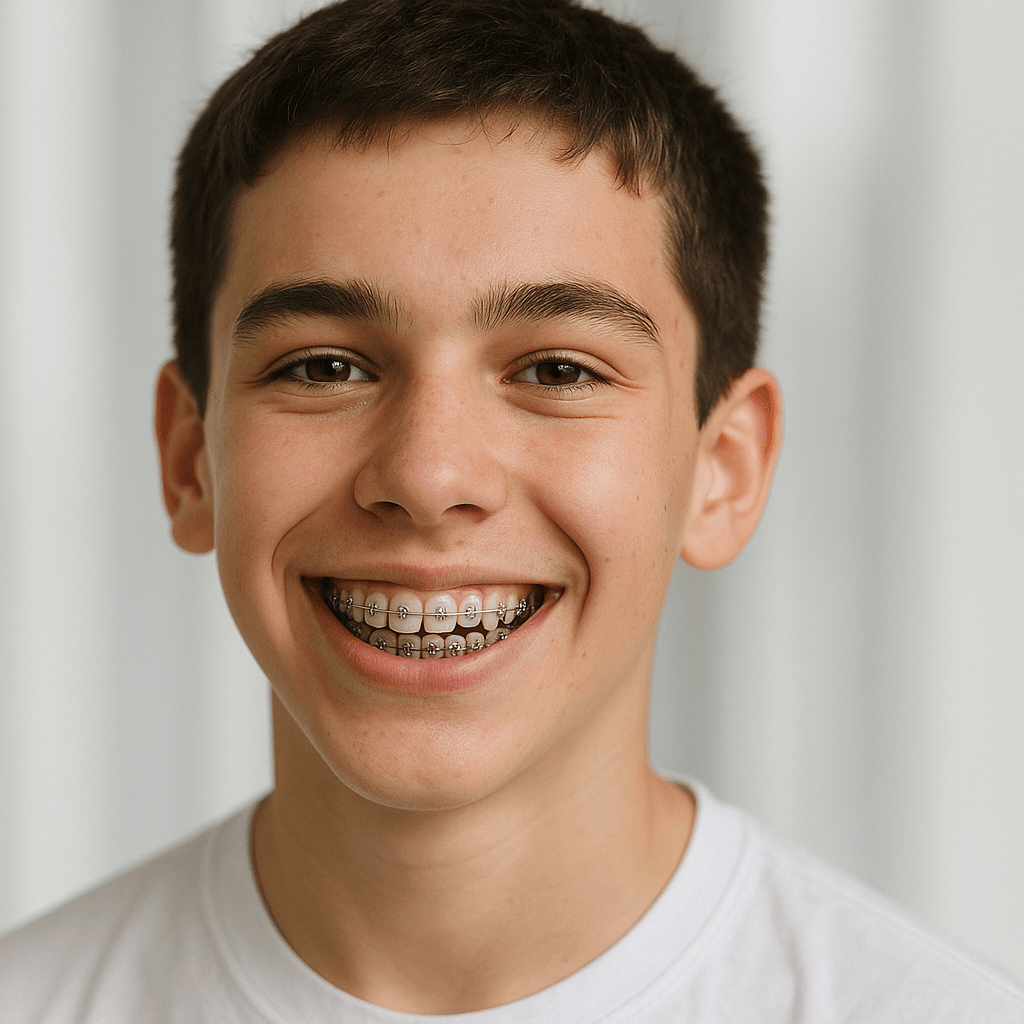
Fixed braces stay attached to your teeth during active treatment. They use brackets, a wire and, when needed, other components to guide planned tooth and bite correction over time.
Brackets are bonded to the teeth and connected by an archwire. As treatment progresses, the clinician can change the wire or use other components to guide the planned tooth and bite correction.
Because the appliance stays in place, there is no removable-aligner wear schedule to remember. Cooperation still matters: cleaning around the braces, attending reviews and following instructions about elastics or other components can all be important parts of treatment. [1]
Choosing braces should start with what needs to be corrected, not with choosing a bracket style first. The orthodontist needs to understand the tooth movements, bite and treatment goals before deciding whether fixed braces are appropriate.
Suitability depends on which teeth need to move, how the bite is involved and what the treatment is intended to achieve. The bracket system should come after that assessment, not before it.
Children, teenagers and adults may all be considered for fixed braces when clinically suitable. For younger patients, the timing of treatment also depends on dental development and treatment need.
Active tooth decay should be treated, and active gum disease should be stabilized, before active orthodontic treatment begins. Existing restorations, implants or missing teeth can also affect the treatment plan, and some cases may need coordination with other dental care. [2]
Fixed braces come in several designs. The main differences are the bracket material, where the brackets sit on the teeth and how the wire is held. Here is a quick overview of the main options you may hear about.
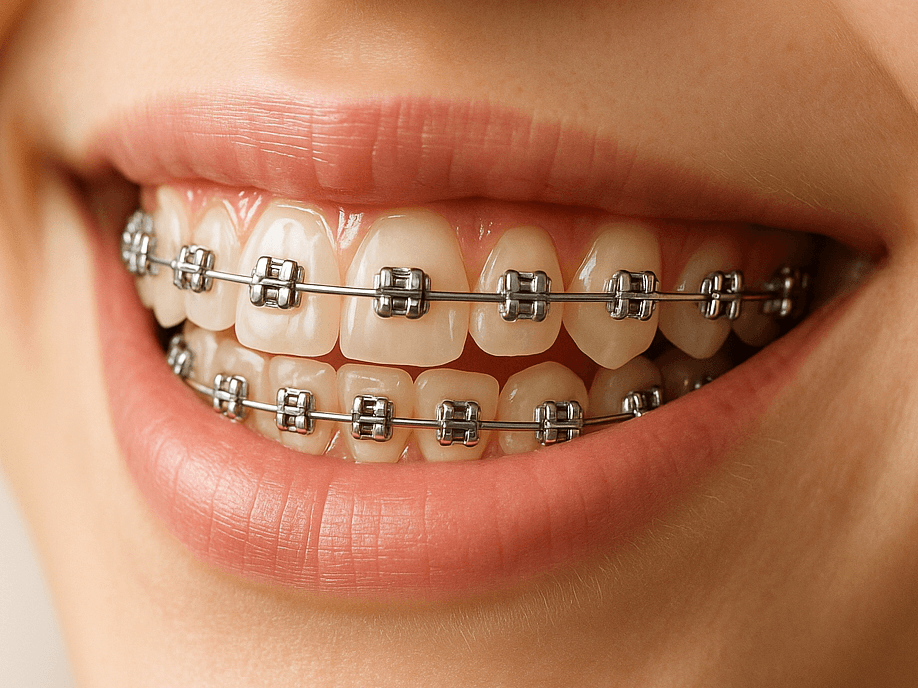
Metal braces use metal brackets on the front of the teeth, connected by an archwire. They are the traditional fixed-brace design that many people are familiar with.
Learn about metal braces →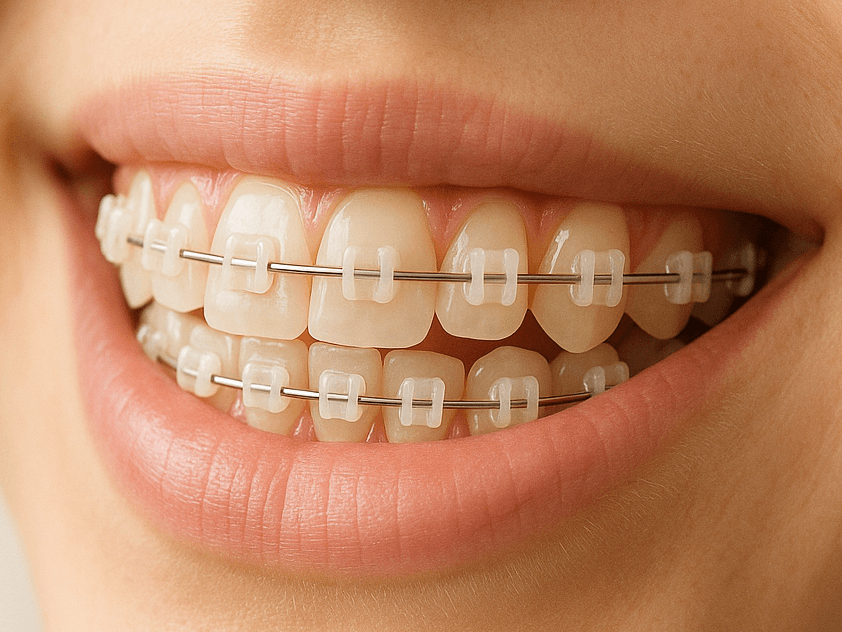
Ceramic braces also sit on the front of the teeth, but they use tooth-coloured or clear brackets. This can make them less noticeable than conventional metal brackets. [3]
Learn about ceramic braces →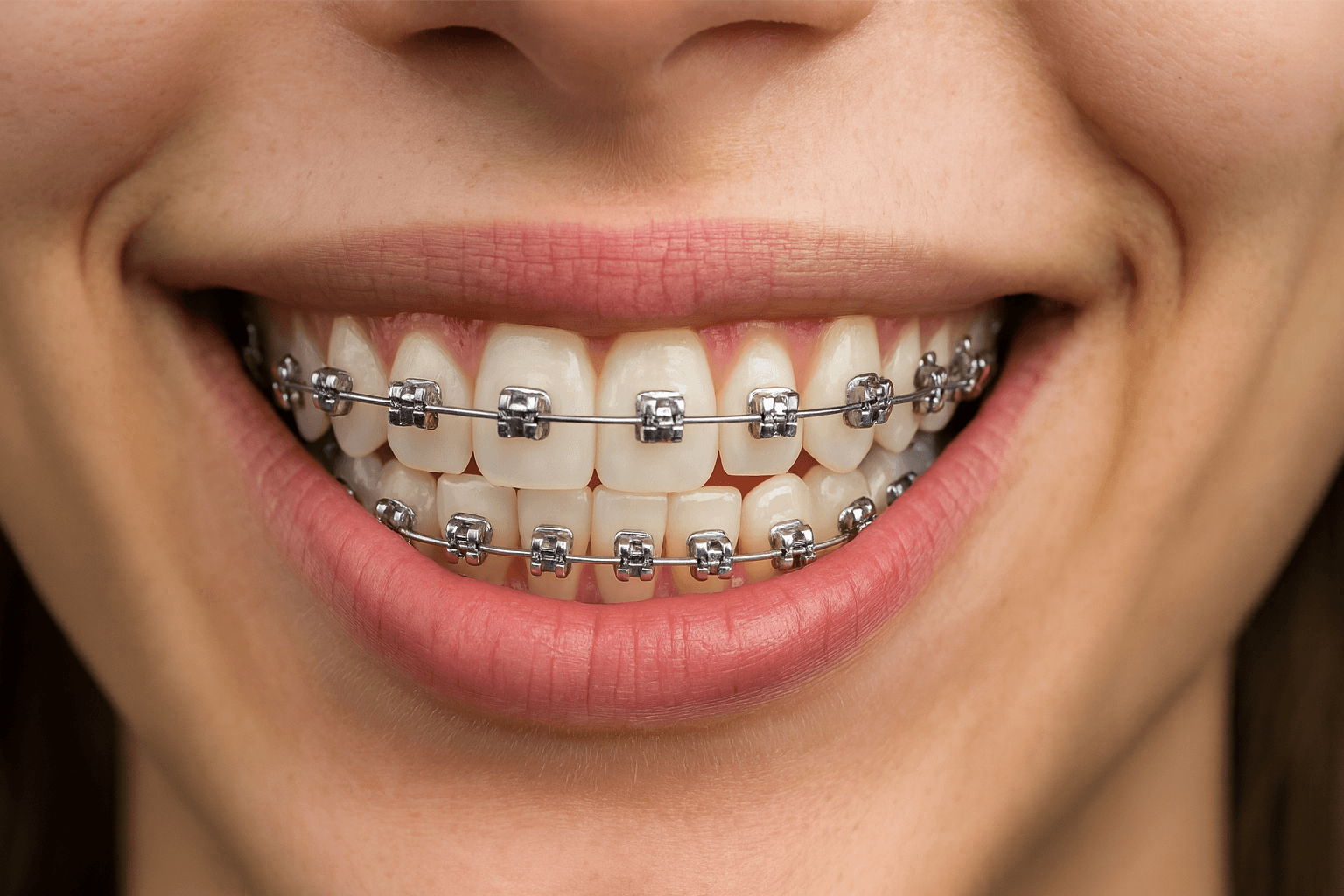
Self-ligating braces use a built-in mechanism in the bracket to hold the wire, instead of separate ties around each bracket. Damon is one brand of self-ligating braces. [4]
Learn about Damon braces →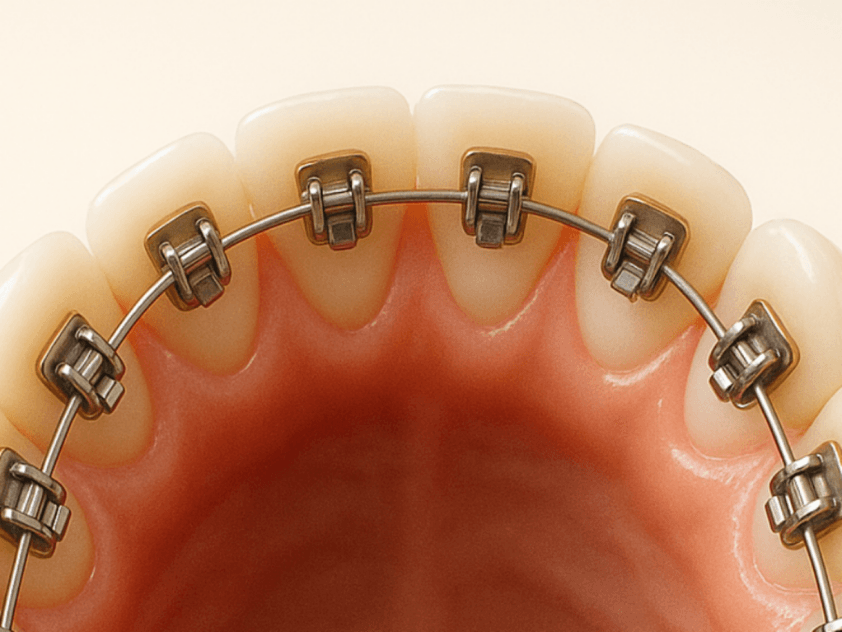
Lingual braces are attached to the inner surfaces of the teeth, so the brackets sit behind the teeth rather than on the front.
Learn about lingual braces →There is no single braces system that is best for everyone. The choice depends on what your treatment needs to achieve, how visible you are comfortable with the appliance being, where the brackets sit and what practical differences matter most to you.
Metal brackets are the most visually obvious. Ceramic brackets can be less noticeable on the front of the teeth, while lingual braces sit behind the teeth. Visibility may matter to you, but it is only one part of the treatment decision.
Metal, ceramic and most self-ligating systems sit on the front surfaces of the teeth. Lingual braces are placed on the inner surfaces instead. The position of the brackets changes the day-to-day experience as well as the appearance.
Conventional braces use ties or ligatures to hold the wire in the brackets. Self-ligating systems use a built-in bracket mechanism instead. That design difference alone does not show that one system will be faster, more comfortable or more suitable for your case. [4]
Appearance, cleaning, speech, food habits and how the appliance feels in daily life can all matter when discussing options. These preferences are useful to raise with your orthodontist, but they do not replace the clinical assessment.
A useful way to approach the choice is to separate two questions: what does your treatment need? and what matters most to you? Your orthodontist needs to answer the first question; your preferences help shape the second.
Answer a few questions about visibility, removability and day-to-day preferences. We’ll show you which options may be worth learning more about before you discuss treatment with an orthodontist.
This explores preferences, not clinical suitability.
Would you prefer to explore fixed braces or a removable option?
If you choose fixed braces, how important is reducing their visibility?
Which placement would you prefer to learn more about?
Front-surface ceramic brackets and behind-the-teeth lingual braces differ mainly in where they sit and how visible they are.
Which fixed-brace design would you like to understand better?
Conventional and self-ligating systems mainly differ in how the wire is held in the bracket.
The details vary from person to person, but fixed-braces treatment usually follows three broad stages: planning the treatment, actively moving the teeth, and then keeping the result stable with retainers.
Treatment starts with an assessment of your teeth, bite, oral health and treatment goals. Depending on what needs to be diagnosed and planned, the orthodontist may use photographs, dental models or scans, and X-rays when they are clinically justified. [5]
The brackets are attached to the teeth and the wire is placed. During treatment, review visits allow the treating team to see how your teeth and bite are responding and to change wires, elastics or other treatment components when needed. There is no single visit interval that applies to everyone. [6]
When active tooth movement is complete, the braces are removed and the retention phase begins. Retainers help maintain the corrected tooth positions. The type of retainer, how often it is worn and the follow-up plan should be individualized. [7]
Learn about retainers after orthodontic treatment →Most day-to-day changes with braces come down to protecting the appliance, keeping the teeth and gums clean, and knowing when a problem needs advice from your treating team.
Some hard or sticky foods and certain biting habits can damage brackets or wires. You may therefore need to change how you eat some foods during treatment. Follow the instructions given for your particular braces rather than relying on one universal list of foods to avoid. [8]
Brackets and wires create extra areas where plaque can collect, so brushing and cleaning around the appliance requires additional care. Poor oral hygiene during orthodontic treatment can contribute to tooth damage and gum inflammation, which is why cleaning support is an important part of braces treatment. [8]
Temporary soreness or irritation of the lips and cheeks can occur after braces are fitted or adjusted. If a bracket becomes loose, a wire is causing significant irritation, or pain or irritation is severe or persistent, contact the treating team for advice. Do not attempt a repair unless they have advised you what to do. [9]
Fixed orthodontic treatment can also have adverse effects involving the teeth or supporting tissues. Your treating clinician should explain the risks that are relevant to your individual case as part of treatment planning and consent. [9]
There is no single braces treatment time that applies to everyone.
Treatment can take substantially different amounts of time depending on what needs to be corrected and how treatment progresses. Your orthodontist should give you an estimate for your own treatment plan and explain what could make that estimate change. [10]
Braces prices in Dubai can vary depending on the type of braces, the treatment needed and what is included in the quote. For current price guidance, use our dedicated braces cost guide.
See braces cost guidance in Dubai →Braces stay fixed to the teeth during treatment, while Invisalign uses removable clear aligners. The more important differences depend on the tooth movements your treatment needs and the practical trade-offs that matter to you.
Compare braces and Invisalign →Before you start treatment, make sure you understand why the recommended braces fit your treatment plan and what will happen during and after treatment. These five questions are a useful place to start.
Who is responsible for diagnosing, planning and overseeing my treatment?
Why is this fixed-brace system being recommended for my case, and what realistic alternatives were considered?
How will my progress be monitored, and what happens if a bracket or wire problem occurs or the treatment plan needs to change?
What limitations and risks are most relevant to my treatment plan?
What retention plan is expected after the braces are removed?
Choosing who will plan and oversee your orthodontic treatment involves more than comparing braces systems. Check who is responsible for diagnosis, treatment planning, monitoring and major treatment decisions, along with their relevant training and continuity-of-care arrangements.
Quick answers to common questions about fixed braces, treatment and choosing between the main braces options.
The main types of fixed braces you may hear about are metal braces, ceramic braces, self-ligating systems such as Damon, and lingual braces placed behind the teeth. The best option for your treatment depends on what needs to be corrected and your individual priorities.
Start with what your treatment needs to achieve. Ask which teeth need to move, how your bite needs to be corrected, why that type of braces is being recommended for your treatment, and what the practical trade-offs are. Appearance matters, but it should not be the only reason for choosing a braces system.
Ceramic brackets are less noticeable than conventional metal brackets on the front of the teeth. Lingual braces sit behind the teeth instead. Visibility can be an important preference, but it is only one part of choosing between treatment options.
There is no single treatment time that applies to everyone. The length of treatment depends on what needs to be corrected and how treatment progresses. Your orthodontist should give you an estimate for your own treatment plan and explain why that estimate could change.
Some temporary soreness or irritation can happen after braces are fitted or adjusted. If pain or irritation is severe or does not settle, contact your treating team for advice.
Contact your treating team and explain what has happened. They can tell you whether you need an appointment and what to do in the meantime. Avoid trying to repair the appliance yourself unless they have specifically advised you how.
Yes. After braces are removed, retainers are usually used to help keep the teeth in their corrected positions. The type of retainer, how often you need to wear it and the follow-up plan should be tailored to your treatment.
LumiQuest Dental Circle is an independent dental guidance platform, not a dental clinic, public ranking or paid-placement marketplace. This guide is designed to help you understand fixed braces, compare the main options and prepare useful questions before discussing your individual treatment plan.
Authorship and clinical review are shown so you can see who is responsible for the information on this page.
LumiQuest can help you organize the questions to ask and understand your options before your appointment.
Ask LumiQuest for guidance ↓Clinical claims in this guide were selectively evidence-checked against relevant professional guidance and research.
Describe your dental concern or goal. We'll review your enquiry and follow up using the contact details you provide.
LumiQuest guidance is currently free for patients; clinic consultation and treatment charges are separate.
We ask for your consent before sharing your identifiable information with a clinic.