Sleep apnea is not just loud snoring — it’s a sleep-related breathing disorder
linked to airway collapse, oxygen drops and long-term health risks.
In Dubai, dentistry plays a screening and supportive role —
helping identify risk, guide suitable oral appliance therapy, and refer appropriately
for medical sleep testing.
LumiQuest focuses on clarity, safety and boundaries.
We don’t promote shortcuts or one-size-fits-all devices.
Instead, we help patients understand when dental involvement makes sense —
and when referral for medical sleep testing is the safer path.
For broader context on dental care in the city, visit
Dentistry in Dubai.
Screening, Not Guesswork Airway, jaw position and risk indicators first
Oral Appliances — When Appropriate Selected cases, conservative and monitored
Clear Referral Pathways Dentistry + sleep medicine coordination
Why Sleep Apnea Needs Proper Assessment
Sleep apnea is not just a noise problem — and it’s not something that should be
“treated” without understanding the airway first.
Safe care depends on screening, risk recognition and knowing when referral is required,
not simply fitting a device.
🌬️
Snoring vs Sleep Apnea
Not all snoring is sleep apnea — but many people with sleep apnea snore.
The difference lies in airflow interruption, oxygen drops and sleep disruption,
not volume alone.
Treating noise without assessing risk can delay proper diagnosis.
🫁
Airway Collapse Is the Core Issue
Obstructive sleep apnea involves repeated airway collapse during sleep —
often related to tongue position, jaw posture and soft tissue behaviour.
Appliances only help when anatomy and severity are suitable.
🧠
Health Risks Go Beyond Sleep
Untreated sleep apnea is linked to daytime fatigue, cardiovascular strain,
metabolic issues and cognitive effects.
This is why proper evaluation matters before choosing any treatment path.
🔍
Dentistry Has a Defined Role
Dentists do not diagnose sleep apnea —
but they can screen risk, assess jaw–airway relationships
and identify who may benefit from oral appliances.
Responsible care includes referral for sleep testing when indicated.
If symptoms are limited to snoring without red flags, start with
Snoring Treatment in Dubai.
When risk indicators are present, the priority shifts to
sleep apnea screening and referral before any appliance is considered.
When Snoring May Be Sleep Apnea
Snoring on its own isn’t always dangerous.
But when it appears alongside certain symptoms, it may signal
sleep apnea rather than simple airway noise.
Recognising these patterns helps guide safe next steps.
😮💨
Breathing Pauses or Gasping
Pauses in breathing, choking sounds or gasping during sleep are
classic warning signs of airway obstruction.
These events are often noticed by partners rather than the patient.
😴
Unrefreshing Sleep
Waking up tired despite enough hours of sleep may reflect
repeated nighttime interruptions, even if you don’t remember them.
Sleep quality matters more than sleep duration.
🧠
Daytime Fatigue or Brain Fog
Ongoing sleep disruption can lead to
poor focus, irritability and low daytime energy.
These symptoms are often blamed on stress or lifestyle instead.
💢
Morning Headaches or Jaw Tension
Some people experience morning headaches, jaw discomfort or muscle fatigue
related to overnight airway strain.
Conditions such as high blood pressure, weight gain or diabetes
increase the importance of ruling out sleep apnea.
Sleep breathing disorders can worsen systemic health over time.
📉
Snoring That Is Getting Worse
Progressive snoring — louder, more frequent or disruptive —
may indicate changing airway dynamics.
Worsening symptoms deserve reassessment, not just a new device.
If snoring occurs without these warning signs, a focused
snoring assessment
may be appropriate.
When multiple signs are present, the priority shifts to
sleep apnea screening and referral before any treatment decision.
How Dentists Screen for Sleep Apnea
Dentists do not diagnose sleep apnea — but they are often the
first professionals to notice airway-related risk factors.
Responsible screening helps determine who may benefit from
dental involvement — and who needs medical sleep testing first.
1. Symptom & Risk Review
Screening starts with a structured review of
snoring patterns, daytime fatigue, morning symptoms
and general health indicators.
Partner-reported symptoms are often especially valuable.
2. Airway & Jaw Evaluation
Dentists assess jaw position, tongue space and bite behaviour
that may contribute to airway narrowing during sleep.
This helps determine whether oral appliances could be suitable.
3. Oral Health & Appliance Suitability
Teeth, gums and jaw joints must be healthy enough to tolerate
a mandibular advancement appliance safely.
Existing dental issues may need addressing first.
4. Referral When Indicated
When risk indicators suggest sleep apnea,
dentists should pause treatment and
refer for medical sleep testing.
Appliances are only considered after diagnosis and collaboration.
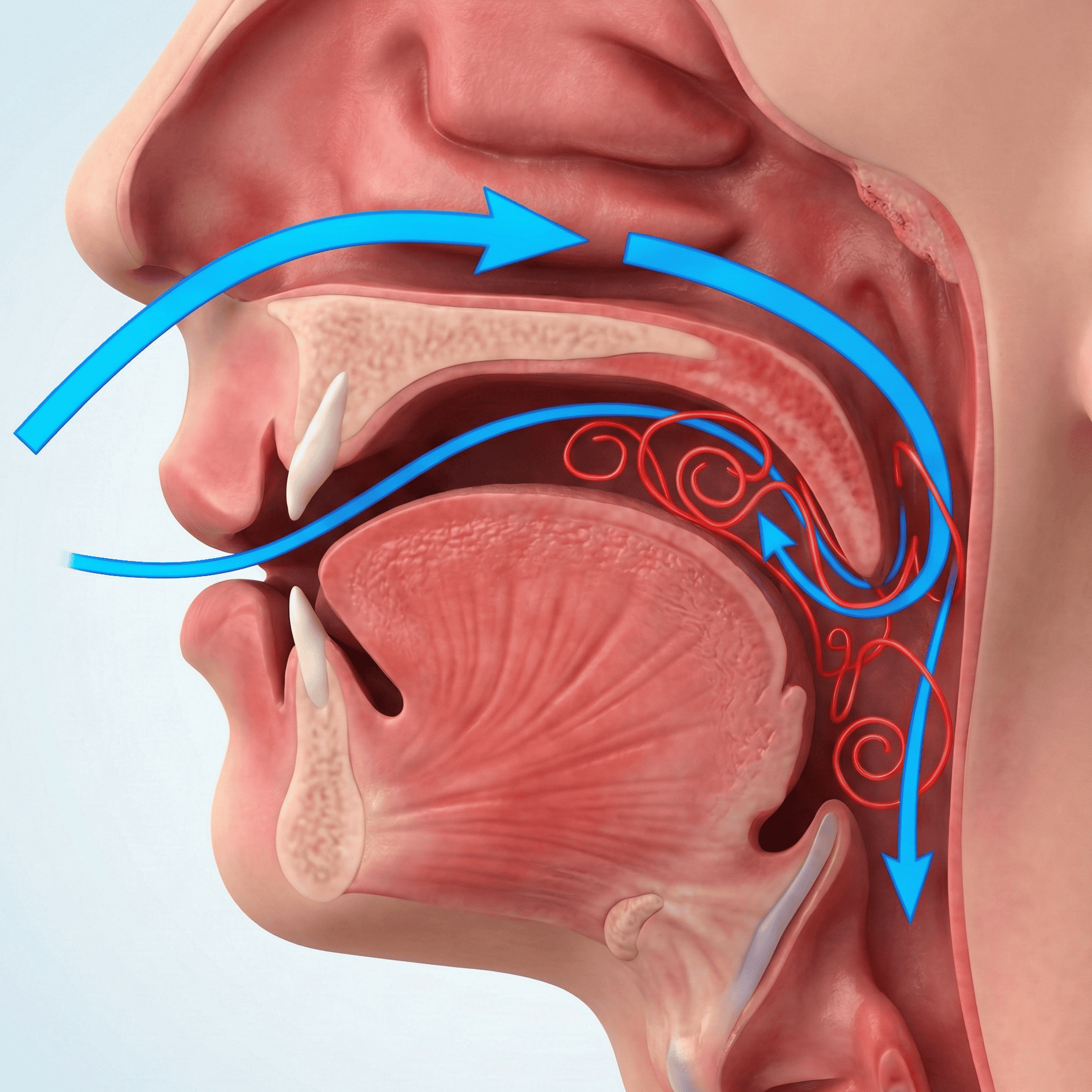
Illustration highlighting how jaw position and soft tissues can narrow the airway during sleep — a key factor dentists screen for when assessing sleep apnea risk.
Screening helps avoid inappropriate appliances and delays in care.
LumiQuest prioritises providers who respect diagnostic boundaries
and coordinate with sleep physicians when needed.
Oral Appliance Therapy — When It Is Appropriate
Oral appliances can play a helpful role in sleep apnea care —
but only for selected patients, and only after
proper screening and diagnosis.
They are not a universal solution, and they are not a shortcut.
When Oral Appliances May Be Appropriate
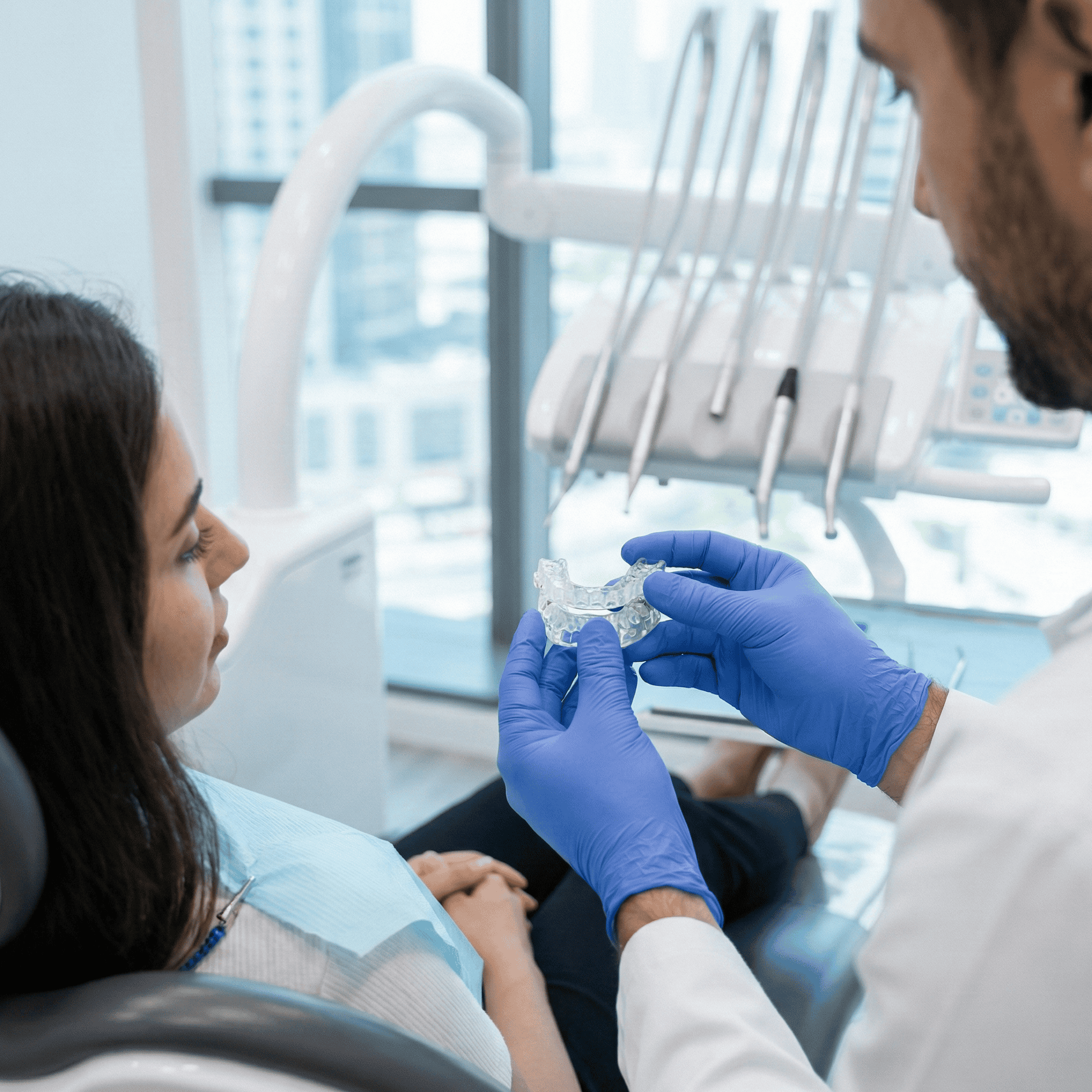
Mild to moderate obstructive sleep apnea,
confirmed by medical sleep testing
Patients who cannot tolerate CPAP
or are seeking an alternative under medical guidance
Suitable jaw anatomy, bite stability and dental health
Willingness to commit to follow-up, adjustments and monitoring
In these cases, mandibular advancement appliances can help
maintain airway openness during sleep
by gently repositioning the lower jaw.
When Oral Appliances Are Not Appropriate
Undiagnosed sleep apnea
or treatment started without sleep testing
Severe sleep apnea
requiring primary medical management
Significant TMJ disorders, unstable bite or poor oral health
Clinics offering appliances as a
first step without screening or referral
Inappropriate appliance use can worsen symptoms,
delay diagnosis, or create jaw and bite problems.
Responsible care means knowing when to say no.
LumiQuest prioritises clinics that use oral appliances
selectively, conservatively and in coordination
with sleep physicians — not as a default solution.
Collaboration With Sleep Physicians
Safe sleep apnea care requires clear role boundaries.
Dentists, sleep physicians and medical providers each play
a distinct part — and outcomes are best when those roles
are respected and coordinated.
Diagnosis Belongs to Medicine
Sleep apnea is a medical diagnosis confirmed through
formal sleep testing.
Dentists should never diagnose or bypass this step.
This protects patients from undertreatment or false reassurance.
Dental Care Supports — It Does Not Replace
When appropriate, dentists support care by
providing and adjusting oral appliances
after diagnosis and in coordination with physicians.
Appliances are part of a plan — not the plan itself.
Referral Is a Strength, Not a Failure
Ethical clinics recognise when symptoms, severity or risk
require medical evaluation or escalation.
Early referral often prevents years of ineffective treatment.
Ongoing Monitoring Matters
Even after appliance fitting, patients benefit from
follow-up sleep assessments to confirm effectiveness.
Comfort alone does not equal successful treatment.
How Coordination Works
Initial dental screening identifies risk
Referral for medical sleep testing
Diagnosis and severity classification
Appliance therapy considered when appropriate
Follow-up and outcome verification
LumiQuest prioritises clinics that demonstrate
clear referral discipline and collaboration —
not those that attempt to manage sleep apnea in isolation.
FAQs: Sleep Apnea & Dental Care in Dubai
Clear answers to common questions about sleep apnea, dental screening,
oral appliances and referral pathways — without shortcuts or oversimplification.
Can a dentist diagnose sleep apnea?
No. Sleep apnea is a medical diagnosis that requires formal sleep testing.
Dentists can screen for risk factors and refer patients for medical evaluation,
but diagnosis belongs to sleep physicians.
What is the difference between snoring and sleep apnea?
Snoring is sound caused by airway vibration.
Sleep apnea involves repeated breathing interruptions,
oxygen drops and sleep fragmentation.
Not all snoring is sleep apnea — but many people with sleep apnea snore.
Are oral appliances effective for sleep apnea?
Oral appliances can be effective for
selected cases of mild to moderate obstructive sleep apnea,
especially when CPAP is not tolerated.
Suitability depends on diagnosis, anatomy and follow-up.
Is CPAP always necessary?
CPAP remains the gold standard for many patients,
particularly with moderate to severe sleep apnea.
Alternatives may be considered only after diagnosis
and medical guidance.
Can dental appliances worsen TMJ or bite problems?
Yes — if used inappropriately.
That’s why dentists must assess TMJ health, bite stability
and jaw tolerance before considering an appliance,
and why follow-up is essential.
What happens if sleep apnea is suspected during a dental visit?
Responsible dentists pause treatment and
refer for medical sleep testing.
Appliances should never be started without
understanding severity and risk.
How does LumiQuest choose which clinics to recommend?
LumiQuest prioritises clinics that demonstrate
ethical screening, conservative judgment
and proper referral discipline.
Clinics that push devices without diagnosis
do not remain in our circle.
If your concern is mainly snoring without warning signs,
start with Snoring Treatment in Dubai.
When symptoms suggest deeper risk, this sleep apnea pathway
focuses on safety first.
What is LumiQuest?
LumiQuest is an independent patient guide that helps you navigate
sleep apnea concerns in Dubai with clearer boundaries.
We focus on safe screening, dental suitability and referral discipline —
so you understand when dentistry can help, when testing is essential,
and when “quick appliance promises” are a red flag.
No Ads. No Sponsorships.
LumiQuest does not accept paid listings or promotions.
Guidance is based on screening quality, conservative decision-making and patient safety —
never on CPAP replacement hype, “one-size-fits-all” devices, or rushed sales.
Clinics Vetted for Sleep Apnea Screening
Clinics are assessed for airway screening, jaw evaluation and referral discipline.
We prioritise providers who explain limitations clearly, use reversible, conservative care,
and coordinate properly when sleep testing or physician input is needed.
A Private Circle of Trust
Only clinics that consistently demonstrate clinical honesty, conservative judgment and proper collaboration
remain in our circle.
LumiQuest helps you access care that prioritises safer sleep, clearer diagnosis and zero pressure
— not appliance-first shortcuts or ignored medical risk.
When sleep apnea is a concern, the approach must be
careful, structured and medically grounded.
LumiQuest helps you navigate
screening, dental suitability and referral pathways in Dubai —
connecting you with providers who respect
diagnostic boundaries, conservative judgment and patient safety.
No pressure, no shortcuts — just clarity about when dentistry helps
and when medical evaluation is essential.
Tell Us What You're Looking For
Describe your dental concern or goal. We'll review your enquiry and follow up using the contact details you provide.
LumiQuest guidance is currently free for patients; clinic consultation and treatment charges are separate.
We ask for your consent before sharing your identifiable information with a clinic.
Enquiring about dental care for a child? Please have a parent or legal guardian submit the enquiry. We may ask for the child's age during follow-up if it is relevant to understanding the care being sought.
Manage Consent
LumiQuest uses necessary cookies and similar technologies for website functionality and security. With your permission, we also use Google Analytics to understand how visitors use our website. You can accept or deny optional analytics cookies, view your preferences, and change your choice later using Manage consent. Read our Privacy Policy for more information.
Functional
Always active
The technical storage or access is strictly necessary for the legitimate purpose of enabling the use of a specific service explicitly requested by the subscriber or user, or for the sole purpose of carrying out the transmission of a communication over an electronic communications network.
Preferences
The technical storage or access is necessary for the legitimate purpose of storing preferences that are not requested by the subscriber or user.
Statistics
With your permission, we use Google Analytics to understand visits and interactions with our website. Analytics cookies are optional, and you can change your choice at any time.The technical storage or access that is used exclusively for anonymous statistical purposes. Without a subpoena, voluntary compliance on the part of your Internet Service Provider, or additional records from a third party, information stored or retrieved for this purpose alone cannot usually be used to identify you.
Marketing
The technical storage or access is required to create user profiles to send advertising, or to track the user on a website or across several websites for similar marketing purposes.