The Jaw Joint (TMJ)
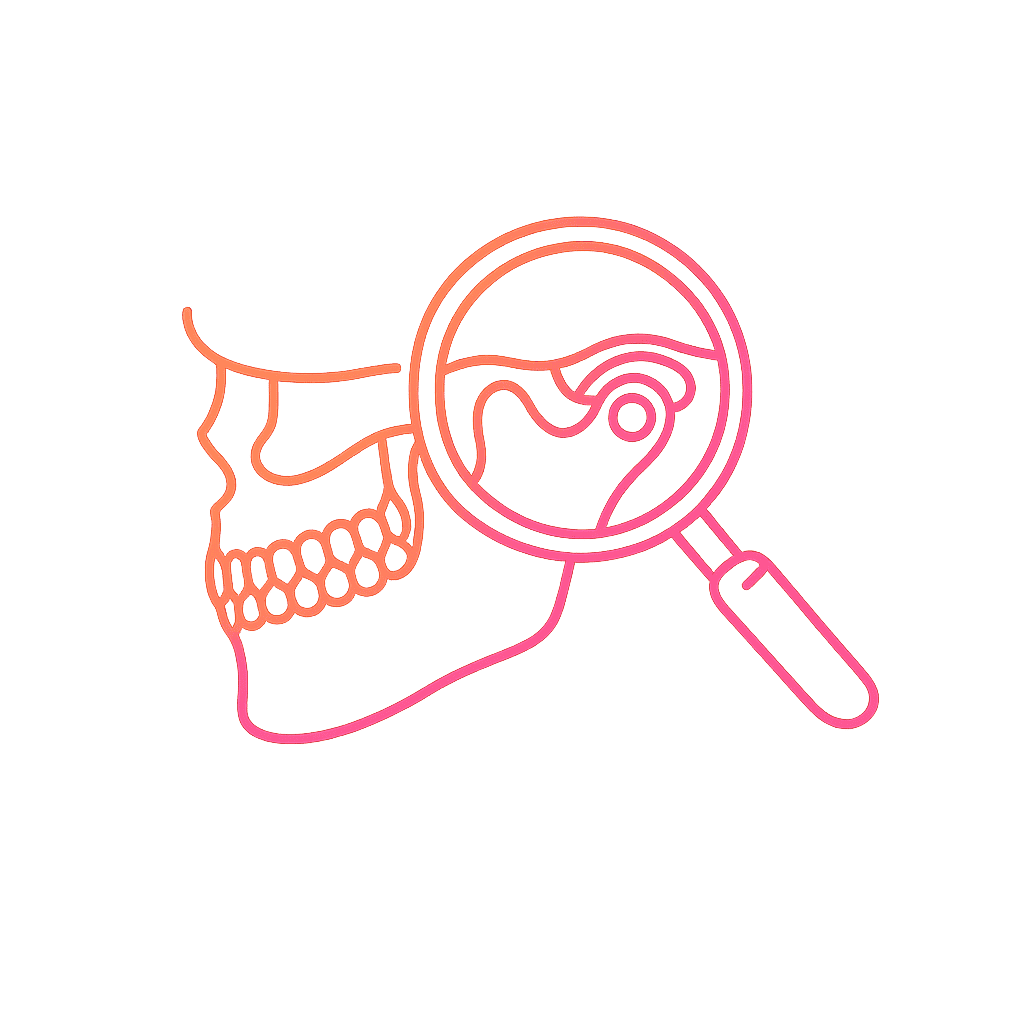
The temporomandibular joint is a small, complex joint that allows the jaw to open, close and move side-to-side.
Clicking, popping or locking may come from disc displacement or joint overload — not always “damage.”

TMJ problems in Dubai are often misunderstood as “just jaw clicking.” In reality, TMJ disorders involve the jaw joint, muscles, bite mechanics and nervous system — and symptoms can range from mild discomfort to chronic pain, headaches and jaw locking.
LumiQuest focuses on clarity before treatment. Instead of immediately pushing appliances or surgery, we help patients understand what TMJ is, why symptoms occur, and when specialist evaluation is truly needed. This page is your starting point before exploring TMJ specialist care, the broader Dubai dental hub, or, in urgent cases, emergency care.

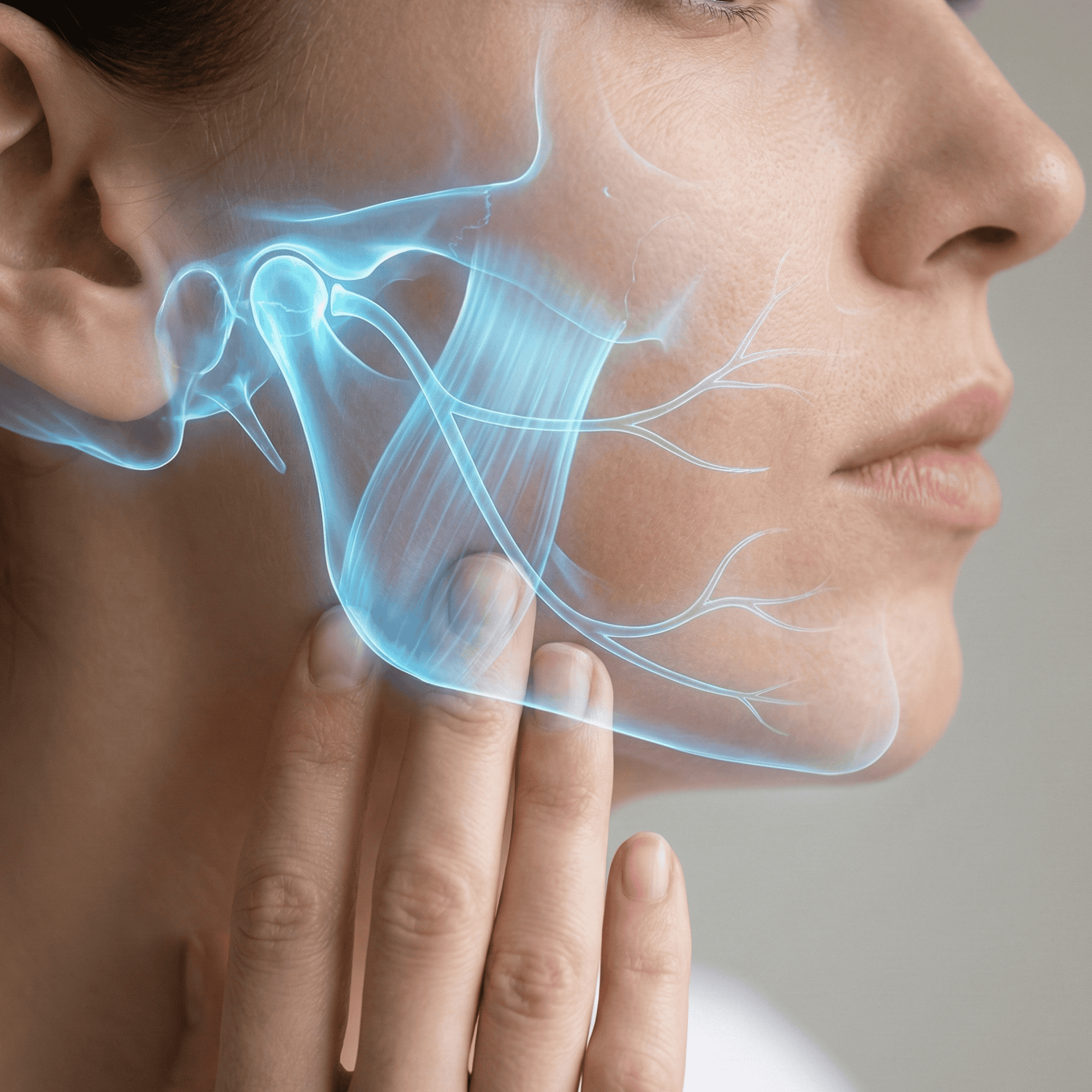
TMJ is not a single problem — it’s a group of conditions involving the jaw joint, muscles, bite mechanics and neuromuscular control. Understanding which component is involved is essential before choosing any treatment.
The temporomandibular joint is a small, complex joint that allows the jaw to open, close and move side-to-side.
Clicking, popping or locking may come from disc displacement or joint overload — not always “damage.”
Many TMJ symptoms are muscle-driven, not joint-driven. Clenching, grinding and stress overload jaw and neck muscles.
This often explains headaches, facial pain and morning stiffness.
How your teeth meet affects how forces are distributed across the jaw joint and muscles.
Imbalances don’t always cause pain immediately — symptoms can build over time.
Chronic TMJ pain often involves central sensitisation, where pain signals become amplified.
This explains why imaging can look “normal” while symptoms persist.
Because TMJ symptoms can come from different sources, jumping straight to splints,
injections or surgery without proper evaluation often leads to frustration.
When symptoms persist or worsen, a structured assessment by a
TMJ specialist
helps clarify the true driver.
Jaw sounds and discomfort are common — but not all TMJ symptoms signal a problem. The key difference is whether symptoms are stable and harmless or progressive and disruptive.
These symptoms often reflect temporary muscle tension or minor joint adaptation. Monitoring and conservative care are usually sufficient.
These patterns suggest joint overload, muscle dysfunction or bite imbalance and should not be ignored.
Seek structured assessment if you experience jaw locking, sudden bite changes, worsening pain, or symptoms spreading to the neck and shoulders. These may indicate progression beyond simple muscle tension.
If symptoms are persistent, escalating or affecting daily life,
the next step is not “trying random appliances” —
it’s understanding why the problem is happening.
This is where a structured evaluation by a
TMJ specialist
becomes appropriate.
TMJ disorders are rarely solved with a single appliance or quick fix. The safest outcomes come from a step-by-step, conservative-first approach that escalates only when clearly necessary.
Many TMJ symptoms improve once patients understand clenching habits, posture, stress triggers and jaw overuse.
Simple adjustments can significantly reduce joint and muscle load.
When muscles are the primary driver, targeted jaw, neck and upper spine physiotherapy often brings relief.
This is frequently more effective than appliances alone.
Occlusal splints may help in specific situations, but they are not universal solutions.
Poorly chosen splints can worsen symptoms or delay real diagnosis.
Botox, joint injections or bite-altering procedures should never be first-line treatment.
These are reserved for specific diagnoses after conservative care fails.
If symptoms persist, worsen or interfere with daily function despite conservative care, a structured assessment by a TMJ specialist helps determine whether imaging, targeted appliances or multidisciplinary care is needed.
Surgery is rarely required for TMJ disorders. When it is discussed, it should follow clear diagnosis, failed conservative care, and careful risk–benefit discussion — not urgency or pressure.
TMJ diagnosis is not based on a single scan or quick chairside opinion. Accurate assessment comes from history, examination and pattern recognition — with imaging used only when it adds clarity.
A proper evaluation starts with when symptoms began, how they change, and what makes them better or worse.
Stress, clenching, posture, chewing habits and sleep patterns often reveal more than scans.
Manual assessment checks jaw movement, opening range, deviation, joint sounds and muscle tenderness.
This helps distinguish muscle-driven pain from joint-based issues.
How your teeth meet influences jaw loading. Evaluation looks for imbalances, interferences and parafunctional wear.
Bite alone rarely explains TMJ — but it often contributes.
X-rays, CBCT or MRI are used selectively, not as routine first steps.
Imaging supports diagnosis — it should not replace clinical judgement.
Many TMJ patients have normal imaging despite real pain, while others show changes that are unrelated to symptoms. Imaging becomes useful when there is locking, trauma, suspected joint pathology or failure to improve with conservative care.
If your symptoms are persistent or unclear, a structured assessment by a TMJ specialist helps determine whether further testing is necessary — and just as importantly, when it is not.
Clear answers to the most common questions about TMJ disorders, jaw pain and specialist care in Dubai — without exaggeration or unnecessary escalation.
No. Jaw clicking without pain or limitation is often benign and self-limiting. It becomes a concern when it’s accompanied by pain, locking, reduced opening or worsening symptoms.
Yes. TMJ-related muscle tension can refer pain to the temples, ears, face and neck. Many patients with “unexplained” headaches or ear discomfort have an underlying jaw or muscle component.
Not always. Most TMJ diagnoses are made clinically. Imaging is used when it adds clarity — such as with locking, trauma or failure to improve with conservative care.
No. Splints can help in specific cases, but they are not universal solutions. Poorly chosen splints can worsen symptoms or delay proper diagnosis.
Yes. Stress-related clenching and grinding are major contributors to muscle-driven TMJ pain. Addressing these factors is often essential for lasting relief.
Specialist evaluation is appropriate when symptoms are persistent, worsening, or affecting daily life, or when basic measures haven’t helped. Learn what specialist care involves on the TMJ Specialist page.
No. Surgery is rare and reserved for clearly diagnosed cases that fail conservative care. Most TMJ patients improve without surgical intervention.
Still unsure whether your symptoms need specialist input? Start with this TMJ overview, then explore the TMJ Specialist guide if symptoms persist or escalate.
LumiQuest is an independent patient guide that helps you navigate TMJ disorders and jaw pain in Dubai. We focus on diagnostic clarity, conservative care and long-term jaw stability — especially when symptoms affect chewing, comfort, sleep or daily function.

LumiQuest does not accept paid listings or promotions. Guidance is based on diagnostic accuracy, conservative-first care and clinical judgement — never on marketing visibility, trendy treatments or financial incentives.

Clinics are assessed for examination quality, diagnosis logic and escalation restraint. We prioritise providers who explain uncertainty clearly, avoid overtreatment and focus on muscle balance, joint protection and functional recovery.

Only clinics that consistently demonstrate clinical honesty, conservative judgment and follow-through remain in our circle. LumiQuest helps you access care that prioritises relief without harm, clarity without pressure — not rushed splints, unnecessary injections or premature surgical pathways.
✔ Guidance grounded in safety, ethics, and real-world signals — in Dubai
Your smile deserves clarity, trust, care — and privacy
No ads · No sponsored spots · 100% patient-first · Fully confidential
When jaw pain affects chewing, sleep, headaches or daily comfort, the plan should be careful — and the diagnosis should be clear. LumiQuest connects you with vetted, ethical providers in Dubai who prioritise conservative-first TMJ care, proper evaluation and long-term jaw stability — without pressure, upselling, or rushed irreversible treatment.
Just a couple of minutes — no pressure, no cost, and fully private
One of our advisors will review your request and guide you to a suitable dentist or clinic, usually within 12 hours.