Snoring Treatment in Dubai — A Dental Approach to Better Sleep
Snoring treatment isn’t just about noise — it’s about airway stability, jaw position and sleep quality. In many adults, snoring is linked to how the lower jaw, tongue and bite behave during sleep — which is where dentistry can play a conservative, non-invasive role. For a broader overview of dental care in the city, see our Dubai guide.
LumiQuest focuses on screening and suitability, not blanket solutions. We help patients understand when dental snoring appliances may help, when monitoring is appropriate, and when referral for sleep apnea evaluation or TMJ assessment is the safer path.

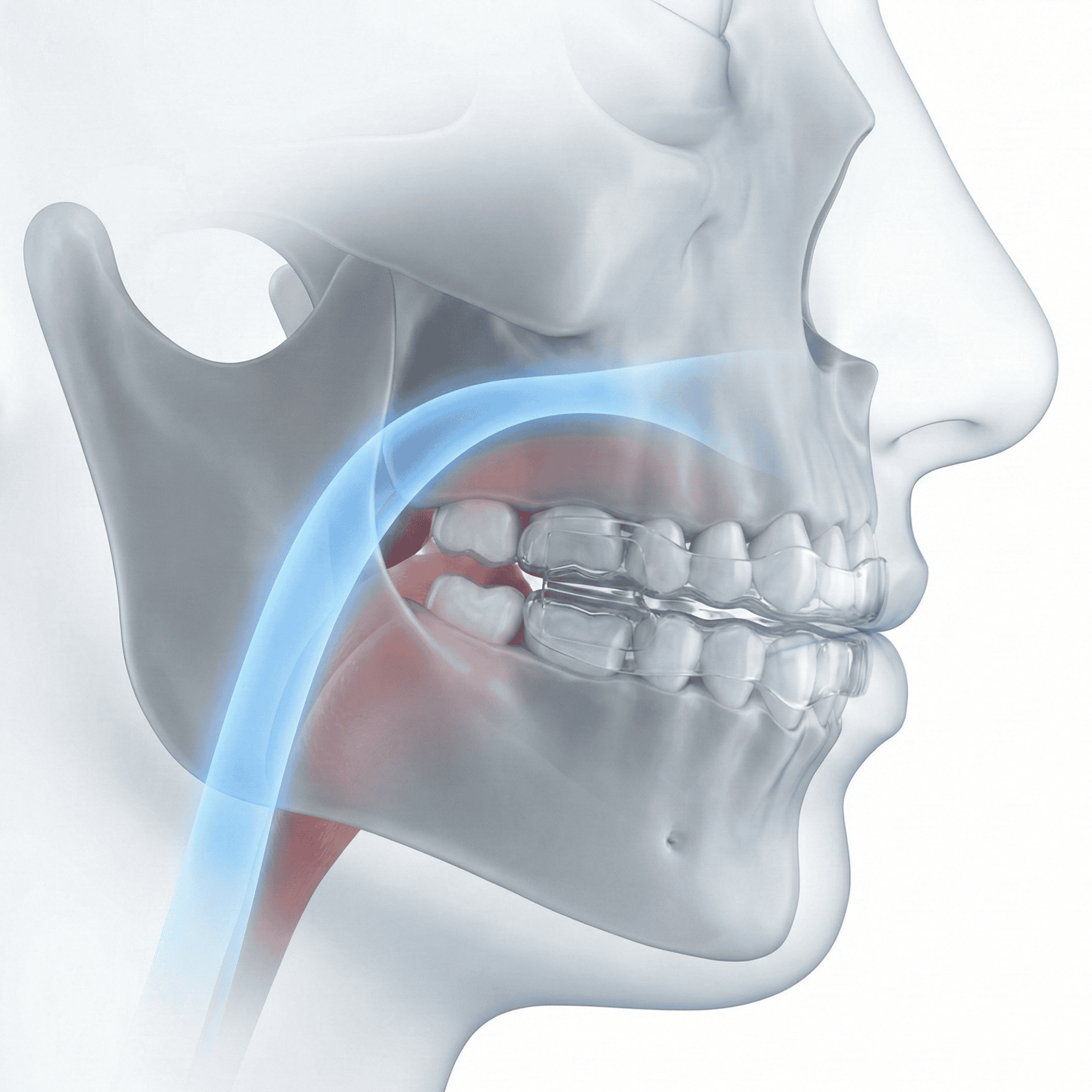
Snoring often starts with jaw position during sleep

Non-invasive, reversible oral appliances

Screening first — treatment only when appropriate

Why Snoring Treatment Needs Proper Assessment
Snoring is not a single condition — and it’s not always harmless. Effective snoring treatment in Dubai depends on understanding airway behaviour, jaw position and risk factors, not simply wearing a generic mouth guard.
Airway Cause Matters
Snoring can result from tongue collapse, jaw retrusion or airway narrowing during sleep.
Without identifying the cause, treatment may be ineffective — or unsafe.

Jaw Position & Bite
In many adults, snoring is linked to how the lower jaw moves backward when muscles relax at night.
Dental appliances work only when jaw mechanics are suitable.
Snoring vs Sleep Apnea
Loud, chronic snoring may signal obstructive sleep apnea, which requires medical diagnosis — not guesswork.
Dental treatment is appropriate only after risk is assessed.
Safety Before Solutions
Responsible care prioritises screening, reversibility and follow-up, not selling appliances to every snorer.
Conservative care protects both sleep and long-term jaw health.
If snoring is accompanied by daytime fatigue, choking sensations, or witnessed breathing pauses, evaluation through the Sleep Apnea page is essential before any dental appliance is considered.
Dental Causes of Snoring
In many adults, snoring is influenced by jaw position, tongue posture and bite mechanics during sleep. Dentistry does not treat every form of snoring — but when oral structures contribute to airway narrowing, dental assessment becomes relevant.
1. Lower Jaw Retrusion During Sleep
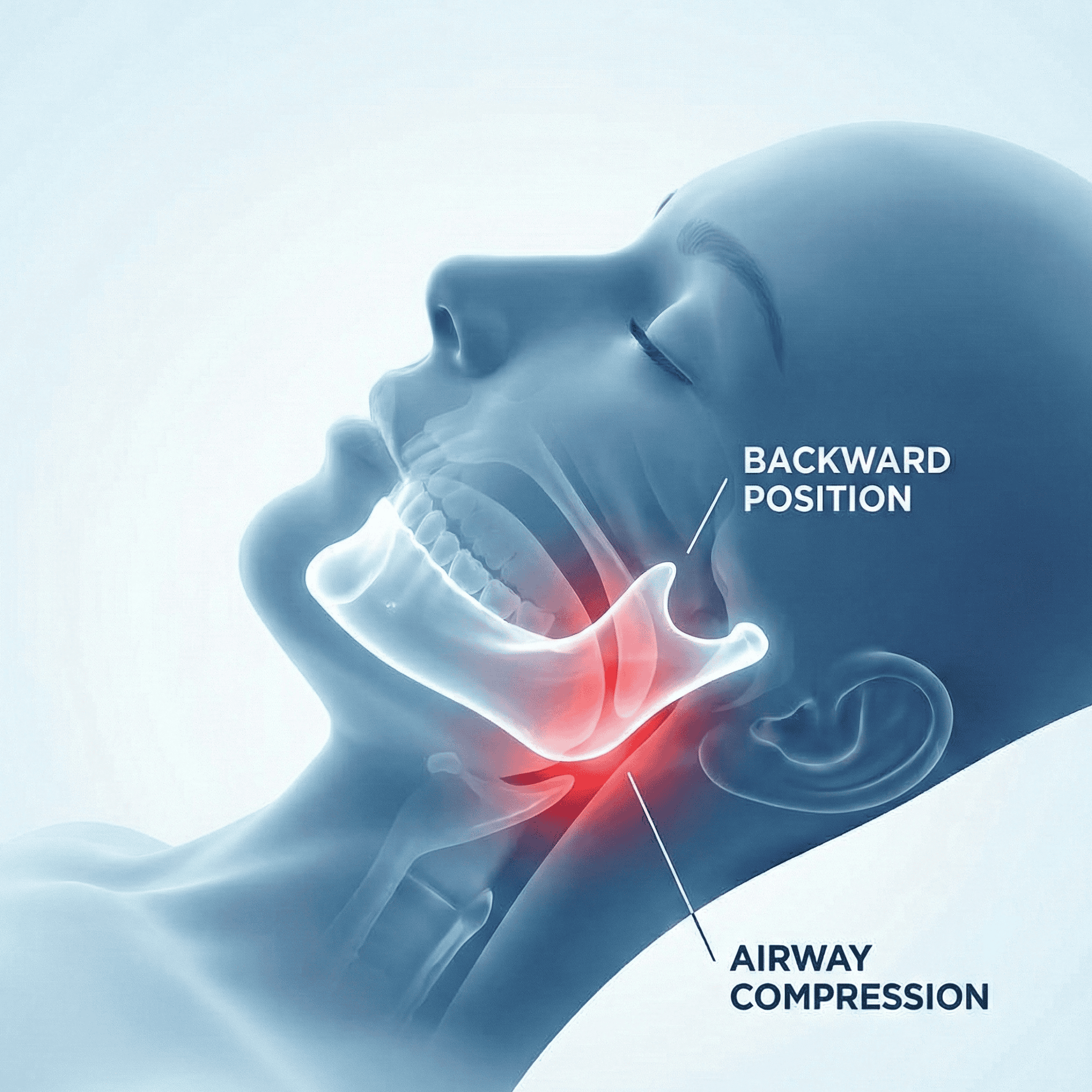
When muscle tone relaxes, the lower jaw can fall backward, reducing airway space behind the tongue.
This is one of the most common dental contributors to snoring.
2. Tongue Position & Airway Collapse
The tongue is anchored to the lower jaw. As the jaw shifts back, the tongue may partially obstruct airflow, creating vibration and snoring sounds.
This mechanism is posture-dependent and often worse when sleeping on the back.
3. Bite Relationship & Jaw Support
Certain bite patterns provide less structural support to maintain airway openness at night.
Dental screening helps determine whether bite mechanics are contributing.
4. Bruxism, Muscle Tension & Snoring
Teeth grinding or clenching can affect jaw position and muscle balance, indirectly influencing airway stability.
This overlap is why snoring is sometimes evaluated alongside TMJ-related concerns.
Dental factors are not the only causes of snoring. Nasal obstruction, weight, alcohol intake and sleep position also matter — which is why proper screening comes before treatment decisions.
Oral Appliances for Snoring — How They Work
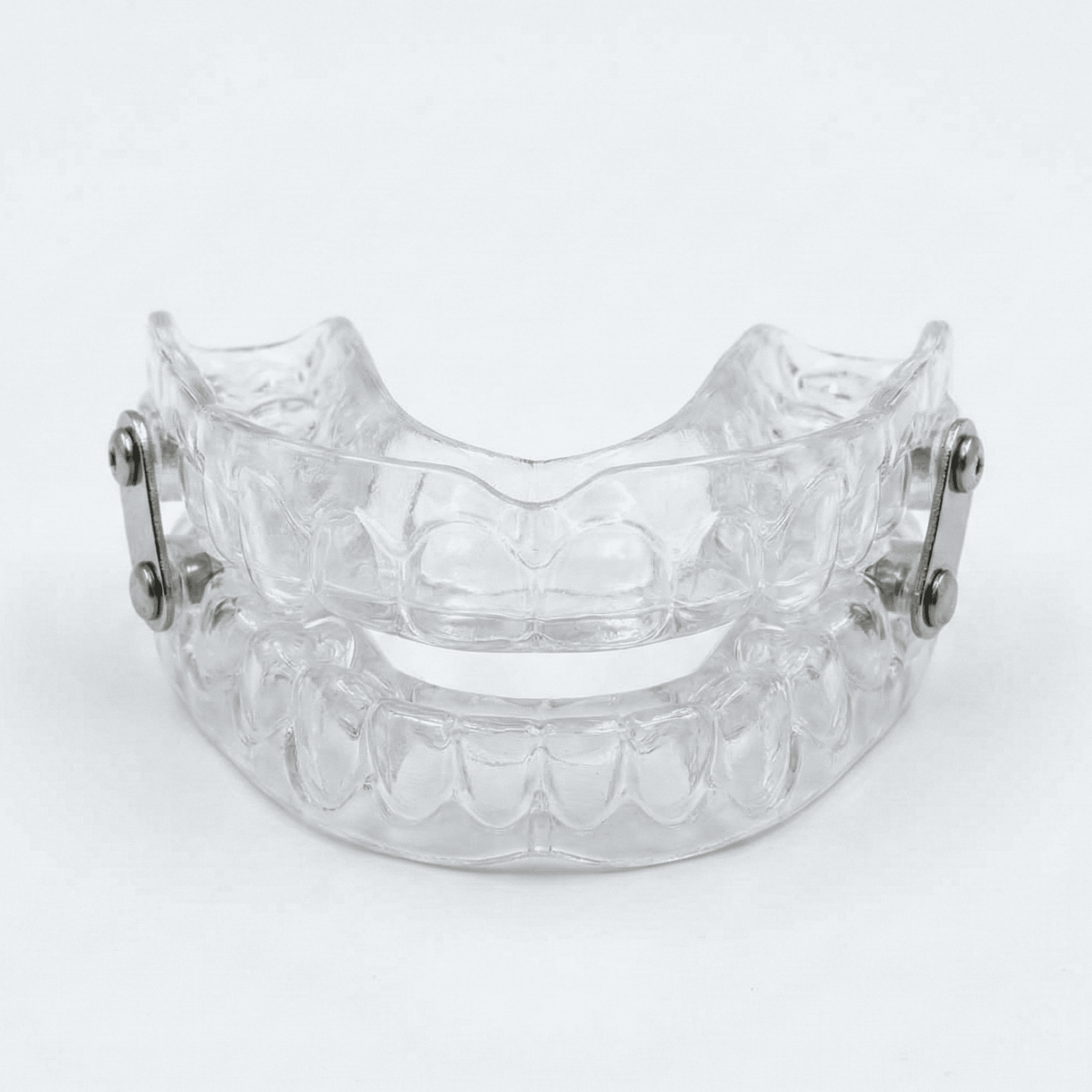
When snoring is linked to jaw position and airway narrowing, custom dental appliances can help by gently supporting the lower jaw during sleep. These devices are non-invasive, removable and adjustable — making them a conservative option for suitable patients.
1. Supporting the Lower Jaw
Most dental snoring appliances work by holding the lower jaw slightly forward, helping keep the airway more open during sleep.
This reduces tissue vibration — the physical cause of snoring noise.
2. Maintaining Airway Space
By stabilising jaw position, the tongue is less likely to fall backward and partially block airflow.
Improved airflow often leads to quieter, more stable breathing.
3. Custom Fit & Adjustability
Effective appliances are custom-made and gradually adjusted, rather than worn at a fixed position from day one.
This protects jaw comfort and allows fine-tuning over time.
4. Reversible & Conservative by Design
Dental snoring appliances are fully removable and non-surgical. Treatment can be modified or stopped if symptoms change.
This makes them appropriate only after proper screening.
Oral appliances are typically considered for primary snoring and selected cases of mild airway-related breathing issues. They are not a substitute for medical diagnosis when sleep apnea is suspected.
If risk factors are present, LumiQuest directs patients first to sleep apnea screening before discussing dental treatment.
What to Expect From Dental Snoring Treatment
Dental snoring treatment is not a single appointment or a one-size-fits-all device. Responsible care follows a step-by-step process focused on comfort, suitability and long-term jaw health.
1. Initial Screening & Risk Review
The process begins with history taking, symptom review and risk screening. Dentists assess snoring patterns, daytime fatigue, jaw comfort and airway risk factors.
If sleep apnea is suspected, referral for medical evaluation comes first.
2. Suitability Assessment
Not every patient is a good candidate. Jaw mobility, bite stability and existing dental work are evaluated to determine whether a removable oral appliance is appropriate.
This step protects against unnecessary or uncomfortable treatment.
3. Custom Appliance Design
When suitable, impressions or digital scans are used to create a custom-fitted appliance designed for gradual adjustment.
Generic, off-the-shelf devices are avoided due to comfort and safety concerns.
4. Adjustment & Adaptation Phase
The appliance is introduced gradually. Small positional changes allow the jaw and muscles to adapt comfortably.
This phase is key to reducing soreness and improving tolerance.
5. Follow-Up & Ongoing Review
Follow-up visits monitor snoring response, comfort and jaw health. Adjustments are made as needed, and treatment can be modified or paused if symptoms change.
Ongoing review protects both sleep quality and long-term bite stability.
Dental snoring treatment aims to reduce snoring intensity and frequency, not guarantee complete silence. Results vary depending on anatomy, sleep habits and consistency of use.
If symptoms worsen or new signs appear, reassessment — including medical referral — is always part of responsible care.
When Snoring May Require Medical Evaluation
Not all snoring should be managed dentally. Certain symptoms suggest a medical sleep disorder that requires physician-led assessment before any dental treatment is considered.
Daytime Fatigue or Sleepiness
Feeling unrefreshed despite adequate sleep, or experiencing excessive daytime sleepiness, may indicate disrupted breathing during sleep.
Breathing Pauses or Gasping
Witnessed pauses in breathing, choking sensations or gasping sounds at night are not typical snoring and require medical evaluation.
High-Risk Medical Factors
Snoring combined with high blood pressure, diabetes, heart disease or significant weight changes increases concern for sleep-related breathing disorders.
Worsening or Persistent Symptoms
Snoring that worsens over time or fails to improve despite conservative measures should always be reassessed.
In these situations, LumiQuest prioritises medical referral and diagnostic clarity. Dental appliances are considered only when it is safe and appropriate to do so — often in coordination with sleep physicians.
Learn how dentistry fits into broader care on the Sleep Apnea page.
FAQs: Snoring Treatment in Dubai
Clear, responsible answers to common questions about dental-based snoring treatment — including suitability, safety, expectations and when medical evaluation is essential.
Can a dentist really help with snoring?
In some cases, yes. Dentists can help when snoring is linked to jaw position, tongue posture or bite mechanics. Dental care is not appropriate for all snoring — which is why screening comes first.
How do dental snoring appliances work?
Most appliances gently support the lower jaw in a forward position, helping keep the airway more open during sleep. This can reduce tissue vibration — the physical cause of snoring noise.
Are snoring mouth guards comfortable to wear?
Comfort depends on custom fit and gradual adjustment. Professionally made appliances are designed to adapt over time. Off-the-shelf mouth guards are more likely to cause discomfort or jaw strain.
How long does it take to notice improvement?
Some patients notice changes within days, while others need several weeks of adjustment. Improvement is typically gradual rather than instant.
Is dental snoring treatment safe for long-term use?
When properly monitored, dental appliances are considered safe and reversible. Regular follow-ups help ensure jaw comfort, bite stability and continued suitability.
What if snoring does not improve with dental care?
If snoring does not improve or worsens, reassessment is essential. In some cases, referral for medical sleep evaluation is the next appropriate step.
When should snoring be evaluated for sleep apnea?
Snoring accompanied by daytime fatigue, breathing pauses, choking sensations or cardiovascular risk factors should always be evaluated medically. Dental treatment is considered only after risk is assessed.
Unsure whether snoring is dental or medical? Start with the Sleep Apnea page to understand when further evaluation is recommended.
What is LumiQuest?
LumiQuest is an independent patient guide that helps you navigate snoring and sleep-related breathing concerns in Dubai. We focus on screening, conservative dental care and patient safety — especially when snoring affects sleep quality, daily energy or a partner’s rest.

No Ads. No Sponsorships.
LumiQuest does not accept paid listings or promotions. Guidance is based on clinical screening, conservative decision-making and patient safety — never on marketing claims, quick fixes or appliance sales.

Clinics Vetted for Snoring Assessment
Clinics are assessed for airway screening, jaw evaluation and referral discipline. We prioritise providers who explain limitations clearly, avoid overtreatment and focus on reversible care, comfort and long-term jaw health.

A Private Circle of Trust
Only clinics that consistently demonstrate clinical honesty, conservative judgment and proper referral remain in our circle. LumiQuest helps you access care that prioritises safer sleep, clarity without pressure — not unnecessary devices, rushed fittings or ignored medical red flags.
✔ Guidance grounded in safety, ethics, and real-world signals — in Dubai
Your smile deserves clarity, trust, care — and privacy
No ads · No sponsored spots · 100% patient-first · Fully confidential
Find Safe, Trusted Snoring Care in Dubai
When snoring affects sleep quality, daily energy or a partner’s rest, the approach should be careful — and the cause should be clear. LumiQuest connects you with vetted, ethical providers in Dubai who prioritise screening, conservative dental care and patient safety — with clear boundaries, appropriate referrals, and no pressure to pursue unnecessary devices or shortcuts.
Get Clear Guidance to the Right Dentist
Just a couple of minutes — no pressure, no cost, and fully private
One of our advisors will review your request and guide you to a suitable dentist or clinic, usually within 12 hours.