Dentures in Dubai — Removable Tooth Replacement Options Explained
Dentures in Dubai are not just about “replacing missing teeth.” They are about restoring chewing function, speech clarity and facial support when fixed options like implants are not suitable — or not desired.
LumiQuest focuses on clinical logic, comfort and long-term usability across dental care in Dubai — not sales or shortcuts.Instead of promoting one-size-fits-all solutions, we help patients understand when dentures make sense, which type fits their situation, and what realistic outcomes look like. You can explore related guidance via the Dentures Cost guide, Dental Implants overview and Tooth Extraction information.

Chewing, speech and daily comfort matter more than looks alone

Proper adaptation reduces sore spots and slipping

Independent guidance based on suitability, not upselling

Who Dentures Are Suitable For
Dentures are not a “default” solution — they are a deliberate clinical choice when priorities include comfort, adaptability, affordability or medical limitations. Understanding suitability helps avoid disappointment and unrealistic expectations.
Patients Missing Multiple Teeth
Dentures are commonly used when several teeth are missing, especially across an entire arch.
They restore basic chewing function, speech support and facial structure.

Not Suitable for Implants
Some patients are not ideal candidates for implants due to bone loss, medical conditions or medication history.
Dentures avoid surgery and can be adjusted as tissues change.
Function & Comfort First
When priorities include basic function, comfort and daily usability, dentures may be preferred over fixed solutions.
Especially for eating, speaking and social confidence.
Budget-Conscious Planning
Dentures are often chosen as a lower-cost tooth replacement option compared to implants or full-mouth reconstruction.
Cost varies by type and materials — see the Dentures Cost guide.
Dentures are not always the best option for every patient. In some cases, dental implants or a combined approach may provide better long-term stability. LumiQuest helps patients understand these trade-offs before committing.
Types of Dentures — Full, Partial & Removable Options
The right denture depends on how many teeth are missing, where support exists, and how much stability you need day-to-day.
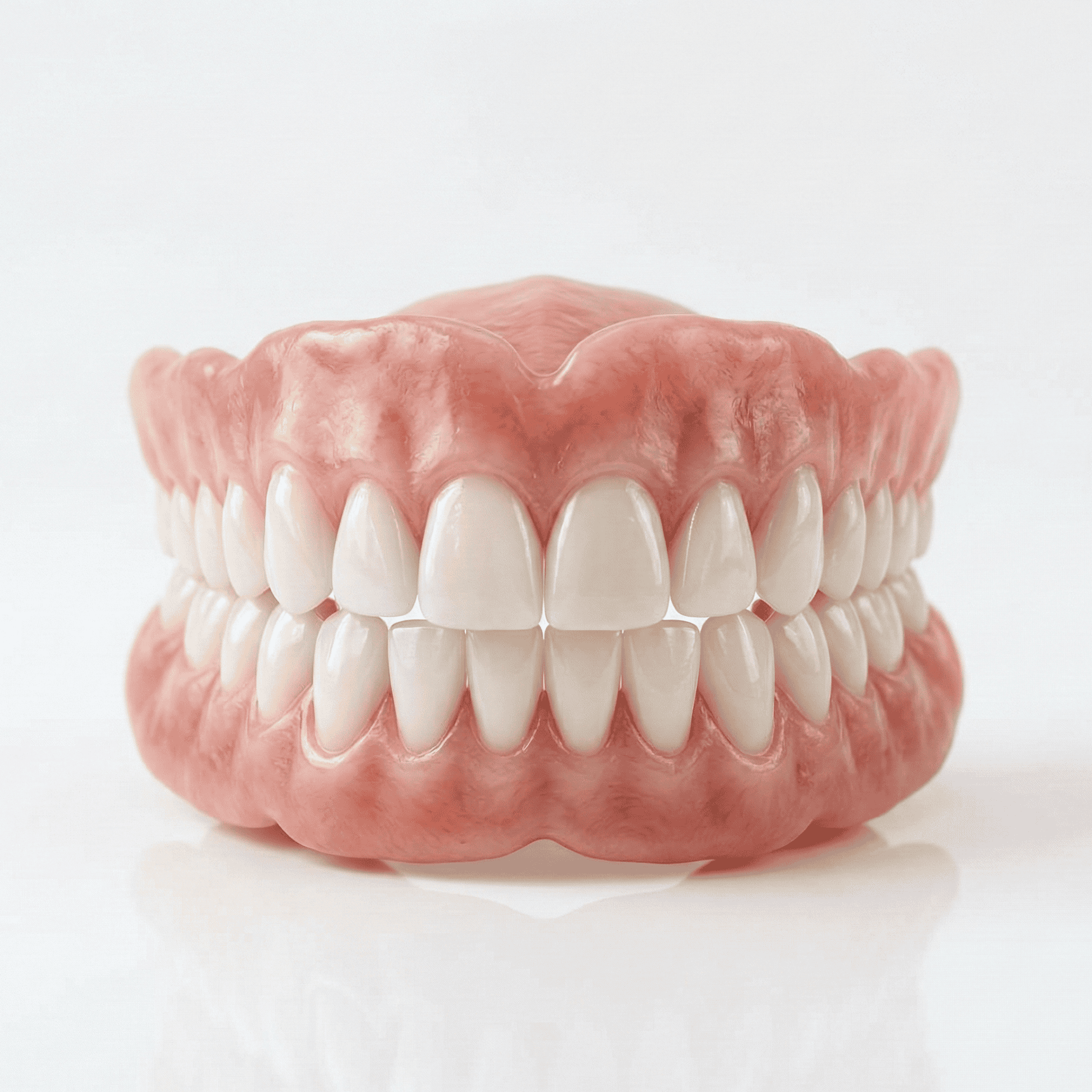
Full Dentures
All teeth in an archReplace all teeth in the upper arch, lower arch, or both. Stability relies on fit (and upper suction) plus adaptation.
- Best for: complete tooth loss
- Watch for: lower-arch movement if bite isn’t balanced
- Quality marker: planned adjustments + relines over time
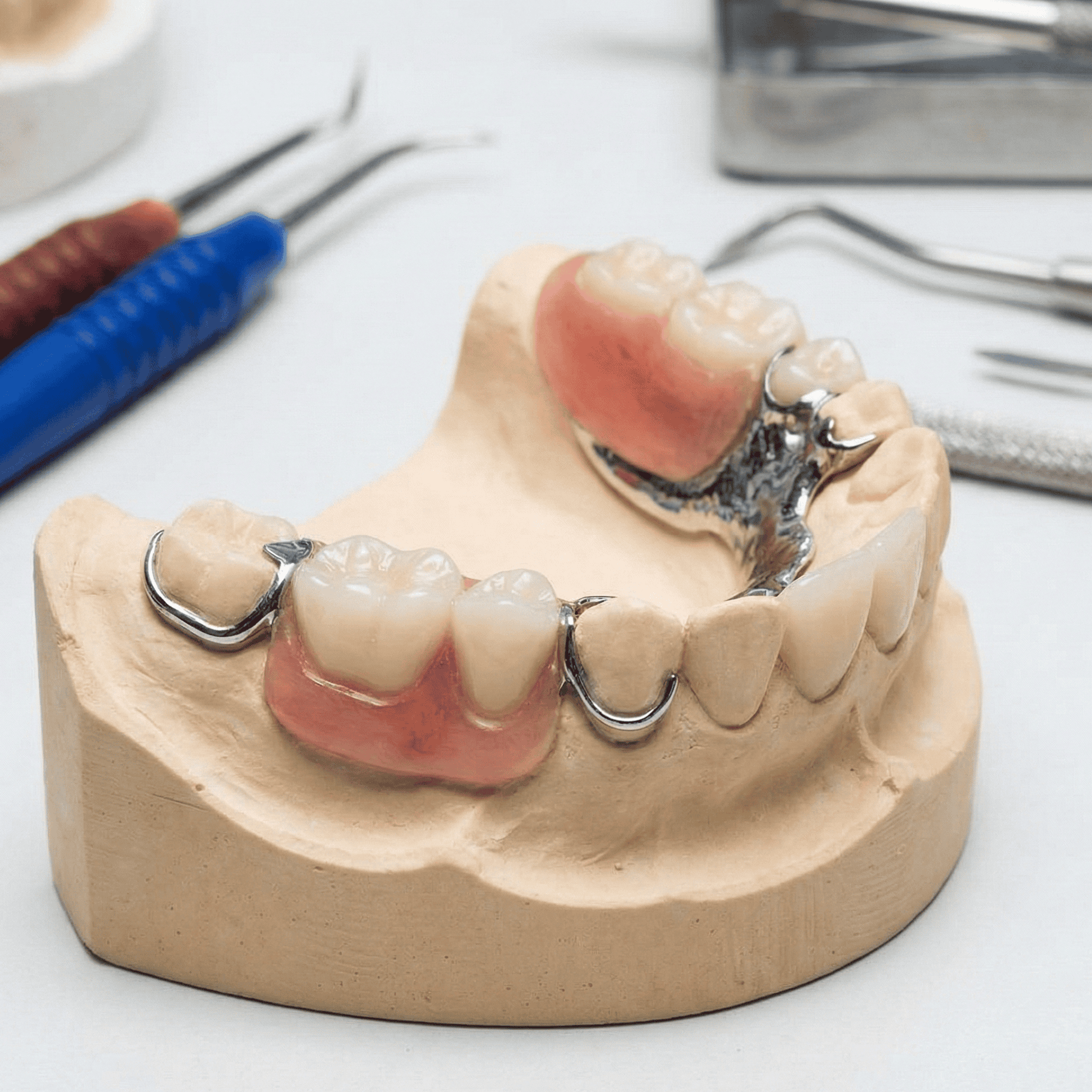
Partial Dentures
Some teeth missingReplace missing teeth while using remaining teeth for support. A good design protects support teeth by distributing bite forces.
- Best for: stable remaining teeth + removable preference
- Watch for: “levering” against teeth (poor design)
- Quality marker: bite balance that feels stable while chewing
Removable Options & Materials
Comfort vs strengthMaterials and thickness affect comfort, durability and edges. Long-term fit changes are normal as tissues remodel.
See Dentures Cost for how type + materials influence pricing.
Dentures vs Dental Implants — Understanding the Trade-Offs
Dentures and implants both replace missing teeth — but they behave differently. The right choice depends on your medical suitability, stability needs, budget, timeline and how much maintenance you’re comfortable with.
Dentures Removable tooth replacement
More adaptableDentures rest on the gums and are designed to restore function and appearance without surgery. They are often chosen when priorities include affordability, flexibility or medical limitations.
- Best for: multiple missing teeth, full-arch replacement, surgical avoidance
- Stability: depends on fit, muscle control and follow-up adjustments
- Timeline: can be faster, but may require adaptation and refinements
- Maintenance: cleaning routines + periodic relines as tissues change
Dentures can be excellent — but expectations must match reality: comfort improves through fit optimisation, not “one visit perfection.”
Dental Implants Fixed, anchored replacement
Most stableImplants replace tooth roots and can support crowns, bridges or implant-retained dentures. They are typically chosen when the priority is maximum stability and long-term function — and the patient is medically suitable.
- Best for: patients who want fixed stability and meet surgical criteria
- Stability: generally higher, especially for lower-arch chewing control
- Timeline: longer due to healing phases and planning steps
- Maintenance: still required (professional cleaning + home care)
Implants are not “maintenance-free.” Long-term success depends on hygiene, gum health, bite forces and ongoing monitoring.
For a full implants overview, see Dental Implants in Dubai. For pricing comparison, review the Dental Implants Cost guide.
The best decision usually comes from one question: Do you need maximum stability — or maximum adaptability?
Some patients choose a combined approach (e.g., implants supporting a removable solution) when stability is needed but full fixed work is not ideal.
If cost is a major factor, start with the Dentures Cost guide. If you are considering surgery, the Implants overview explains suitability and planning.
What to Expect When Getting Dentures
Dentures are a process, not a single product. The best outcomes come from accurate records, careful bite setup, and follow-up adjustments that refine comfort over time.
1) Assessment & Suitability
A proper plan starts with oral examination, gum and tissue evaluation, bite assessment, and a conversation about your goals: chewing ability, comfort, appearance, and timeline.
If extractions are needed before dentures, see Tooth Extraction.
2) Records & Impressions
Dentures depend heavily on accuracy. Impressions (or scans), jaw relations, and fit mapping are used to design a denture that distributes pressure evenly and reduces sore spots.
“Good fit” is engineered at this stage — not fixed later with glue.
3) Bite Setup & Tooth Position
The bite is set to improve function and stability. Tooth positioning affects speech, chewing control and even facial support.
A rushed bite setup is a common cause of discomfort and instability.
4) Try-In (When Applicable)
Many plans include a try-in stage to check smile line, tooth shape, bite and speech before final delivery. This step reduces surprises and improves confidence.
The goal is a natural-looking result that also functions reliably.
5) Delivery & Adaptation
The first days can feel unfamiliar. Mild pressure points, changes in saliva, and speech adaptation are normal. Comfort improves through short refinement visits.
Expect adjustments — this is part of quality care, not a failure.
6) Review Visits, Relines & Long-Term Fit
Gums and bone change over time. Many patients need periodic relines to maintain stability and comfort. Long-term success is a mix of fit, bite balance, and consistent care.
If you’re comparing long-term options, see Dental Implants for stability trade-offs.
If you’re worried about cost, materials, or what affects pricing, the Dentures Cost guide breaks down the factors that change total fees.
Living With Dentures — Comfort, Care & Adjustments
Good denture experiences come from realistic expectations and small, timely refinements — not from “perfect fit on day one.”
Comfort improves with adjustments
Mild sore spots are common early on and are usually fixed with targeted pressure relief. Persistent pain is not normal.
Eating & chewing take practice
Start with softer foods and chew evenly on both sides. Instability often means the bite needs balancing, not that dentures “don’t work.”
Speech adapts quickly
Temporary speech changes are common. Reading out loud for a few minutes daily usually speeds up adaptation.
Relines are part of long-term care
Gums and bone change over time. Periodic relines help restore stability and comfort.
Daily cleaning
Clean dentures daily and keep gums and tongue clean to reduce irritation and odour.
Wearing at night
Many patients benefit from removing dentures at night. Your dentist will advise based on your tissues and fit.
Adhesives & stability
Adhesives may help occasionally, but they should not replace proper fit or adjustments.
Review visits
Regular check-ups prevent sore spots, cracks and bite imbalance before they escalate.
If long-term stability is a concern, the Dental Implants overview explains when fixed anchorage may be more suitable. For pricing factors, see the Dentures Cost guide.
FAQs: Dentures in Dubai
Straight answers to the most common questions about dentures in Dubai — from comfort and longevity to night wearing and when implants may be the better option.
Who is a good candidate for dentures?
Dentures are a strong option when you are missing one or more teeth and want a removable solution — especially if you want to avoid surgery, need a quicker plan, or are not an ideal candidate for implants due to anatomy, medical considerations, or budget. The best results come when expectations focus on function, comfort and follow-up adjustments.
What is the difference between full and partial dentures?
Full dentures replace all teeth in an arch (upper, lower, or both). Partial dentures replace some missing teeth and use remaining teeth for support. Partials can feel more stable when support teeth are healthy, while full dentures rely more on fit, suction (upper), muscle control and bite balance.
Are dentures comfortable to wear and eat with?
They can be very comfortable when the fit and bite are planned properly — but most patients go through a short adaptation phase. Early pressure points are common and usually fixed with small adjustments. Eating improves faster when you start with softer foods and chew evenly. Persistent pain or slipping usually means the denture needs refinement — not that “dentures don’t work.”
How long do dentures last before needing replacement?
Dentures can last for years, but many patients need updates due to wear, cracks, bite changes, or changes in gum and bone support. Even if the denture teeth look fine, stability can drop over time and a reline or replacement may be recommended to restore fit and comfort.
Can dentures be worn at night?
Often, it’s better to remove dentures at night so tissues can rest — especially in full dentures. Some patients may be advised to keep them in temporarily during early adaptation or specific situations. Either way, hygiene matters: dentures should be cleaned daily and the gums and tongue should also be cleaned.
Are dentures a permanent solution for missing teeth?
Dentures can be a long-term solution, but they are not “set and forget.” Because gums and bone can change, most patients need periodic adjustments and sometimes relines to maintain stability. Long-term success depends on fit, bite balance, daily care and review visits.
When are dental implants a better option than dentures?
Implants can be a better option when you want maximum stability, stronger chewing control (especially in the lower arch), and you’re medically suitable for surgery and healing timelines. They can also support a removable solution for added retention. If you’re exploring surgical options, start with Dental Implants.
If pricing is your main concern, see the Dentures Cost guide. For urgent pain or swelling, visit Emergency Dentist.
What is LumiQuest?
LumiQuest is an independent patient guide that helps you navigate dentures and removable tooth replacement in Dubai. We focus on comfort, function and realistic expectations — especially when tooth loss affects chewing, speech, confidence or daily life.

No Ads. No Sponsorships.
LumiQuest does not accept paid listings or promotions. Guidance is based on clinical suitability, fit quality and long-term usability — never on marketing visibility, discounts or incentives.

Clinics Vetted for Denture Planning
Clinics are assessed for records accuracy, bite setup and follow-up standards. We prioritise providers who explain trade-offs clearly, plan conservatively and focus on comfort, stability and function — not rushed delivery.

A Private Circle of Trust
Only clinics that consistently demonstrate clinical honesty, careful fit and follow-through remain in our circle. LumiQuest helps you access care that prioritises adaptation support, pressure relief and long-term stability — not “one-visit dentures” with ongoing frustration.
✔ Guidance grounded in safety, ethics, and real-world signals — in Dubai
Your smile deserves clarity, trust, care — and privacy
No ads · No sponsored spots · 100% patient-first · Fully confidential
Find Safe, Trusted Denture Care in Dubai
When tooth loss affects chewing, speech or confidence, the plan needs to be realistic — and the fit needs to be precise. LumiQuest connects you with vetted, ethical dental providers in Dubai who prioritise comfort, stability and long-term usability — without pressure, upselling or rushed delivery.
Get Clear Guidance to the Right Dentist
Just a couple of minutes — no pressure, no cost, and fully private
One of our advisors will review your request and guide you to a suitable dentist or clinic, usually within 12 hours.