Plaque Biofilm
Plaque is a sticky bacterial film that constantly forms on teeth. When not removed professionally, it triggers gum inflammation and bleeding.
Plaque reforms daily — which is why regular cleaning matters.

Dental cleaning in Dubai isn’t just about polishing teeth for appearance. It’s a preventive medical procedure designed to remove plaque and hardened tartar, protect gum health, and reduce the risk of decay, inflammation and long-term oral disease.
LumiQuest focuses on clinical necessity, safety and prevention — not rushed “quick cleans” or cosmetic-only polishing. We help patients understand what cleaning actually removes, how often it’s needed, and how dental cleaning fits within overall dental care in Dubai — including when deeper care or referral to a periodontist may be appropriate.
Professional dental cleaning removes deposits that daily brushing and flossing cannot. These deposits are the main drivers of gum inflammation, bad breath and early periodontal disease — even in patients with good home care.
Plaque is a sticky bacterial film that constantly forms on teeth. When not removed professionally, it triggers gum inflammation and bleeding.
Plaque reforms daily — which is why regular cleaning matters.
Tartar is hardened plaque that cannot be removed with brushing. It traps bacteria below the gumline and accelerates gum disease.
Only professional scaling can remove calculus safely.
Harmful bacteria release toxins that irritate gums and bone. Cleaning reduces the bacterial load responsible for swelling and tenderness.
This is why gums often feel healthier after cleaning.
Plaque and tartar are major causes of persistent bad breath, especially around the gum margins and between teeth.
Mouthwash alone cannot eliminate these sources.
If deposits extend deeper under the gums or inflammation does not resolve, further evaluation by a periodontist may be recommended to prevent progression.
There is no single schedule that fits everyone. The ideal dental cleaning frequency depends on gum health, plaque build-up rate, medical history and oral habits — not a fixed calendar rule.
For patients with healthy gums and low plaque accumulation, professional cleaning every six months is usually sufficient.
This interval helps prevent tartar buildup before inflammation starts.
Patients with bleeding gums, crowding, orthodontic appliances, implants or a history of gum disease often benefit from more frequent care.
Shorter intervals reduce bacterial load and stabilise gum health.
Conditions such as diabetes, smoking, dry mouth or certain medications can increase plaque and inflammation risk.
Cleaning schedules should adapt to systemic health.
Skipping cleanings allows disease to progress silently. Over-cleaning without indication can irritate tissues unnecessarily.
The goal is appropriate timing, not maximum visits.
A proper dental examination determines whether routine cleaning is sufficient or whether deeper care or referral to a periodontist is more appropriate. Ethical care prioritises need-based scheduling, not fixed packages.
Not all dental cleanings are the same. The difference between routine cleaning and deep cleaning depends on where plaque and tartar are located — and how the gums are responding.
Routine cleaning focuses on removing plaque and tartar above the gumline and lightly below it, before inflammation progresses.
Most adults with stable gum health only need routine cleaning.
Deep cleaning is recommended when tartar and bacteria extend below the gumline and gums show signs of ongoing inflammation.
Deep cleaning is a therapeutic procedure — not a cosmetic upgrade.
Ethical care means starting with routine cleaning when appropriate and escalating to deep cleaning only when clearly indicated. When gum disease is advanced, referral to a periodontist ensures specialised management.
A professional dental cleaning follows a structured, clinical process. It is not rushed polishing — and it should never feel like guesswork.
The visit begins with an examination of your teeth, gums and existing dental work. Gums are checked for bleeding, inflammation or pocketing that may affect the type of cleaning required.
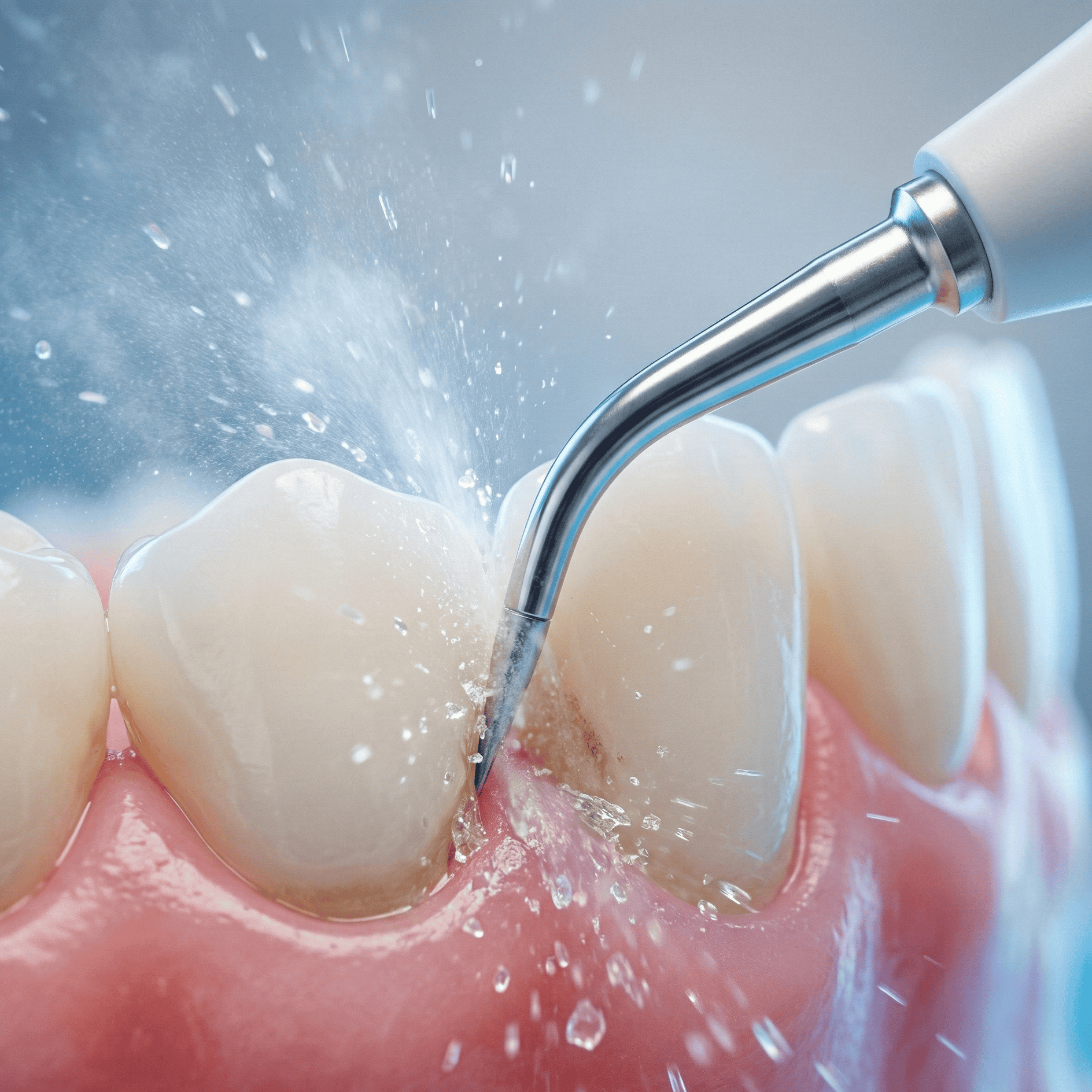
Plaque and tartar are removed using manual instruments or ultrasonic scalers, focusing on areas brushing cannot reach — especially near the gumline.
Teeth are polished to remove surface stains and smooth enamel, making it harder for plaque to reattach after the visit.
Interdental areas are cleaned to remove trapped debris and plaque that flossing alone may miss — a key step for gum protection.
The visit concludes with guidance on home care, frequency of future cleanings, and whether any further evaluation is needed.
If deeper gum involvement is identified during the visit, further assessment or referral to a periodontist may be recommended — before problems progress silently.
Most patients feel cleaner and fresher after a dental cleaning. Mild sensitivity or gum tenderness can occur — but it should be temporary and manageable.
Mild sensitivity to cold or brushing, and light gum soreness, are common for 24–72 hours after cleaning — especially if tartar was present.
Use a soft toothbrush, gentle technique and non-abrasive toothpaste. Good home care supports healing and keeps results stable.
Gums often bleed less and feel firmer within days. Persistent swelling or bleeding may indicate underlying gum disease.
Pain, swelling or bleeding that does not improve after a few days should be reviewed — not ignored or repeatedly “cleaned.”

As plaque and bacteria are removed, gums can finally recover. This is why early cleanings help reverse inflammation before it becomes permanent damage.
If symptoms persist or worsen, further assessment — sometimes with a periodontist — helps protect bone and long-term stability.
Ethical care focuses on monitoring and appropriate follow-up, not repeating procedures without a clear reason.
If you’re unsure whether discomfort after cleaning is normal, or how often follow-up is needed, a clear review prevents unnecessary treatment and long-term complications.
Clear answers to common questions about professional dental cleaning in Dubai — from pain and frequency to safety, gum health and when deeper care is needed.
Routine dental cleaning is usually not painful. Mild sensitivity can occur if tartar buildup or gum inflammation is present, but discomfort should be short-lived. Persistent pain is not normal and should be reviewed.
Most adults benefit from cleaning every six months. Patients with bleeding gums, orthodontic appliances, implants or a history of gum disease may need more frequent care based on clinical findings — not fixed packages.
Scaling removes plaque and tartar from teeth and around the gums. Polishing smooths the tooth surface to reduce stain retention and slow plaque reattachment. Both are part of routine professional cleaning.
When performed correctly, dental cleaning is safe for enamel and gums. Problems usually arise from aggressive technique or unnecessary repetition — not from cleaning itself.
Yes. Even excellent home care cannot remove hardened tartar. Professional cleaning reaches areas brushing and flossing miss, especially near the gumline and between teeth.
Yes — and it is especially important. Cleaning around braces, retainers and implants helps prevent inflammation, decay and long-term complications when performed with appropriate instruments.
Deep cleaning is recommended only when plaque and bacteria extend below the gumline and gums show signs of disease. It is a therapeutic procedure — not a routine upgrade.
Costs vary based on the type of cleaning and gum condition. For transparent ranges and what affects pricing, see the Dental Cleaning Cost guide.
For a broader view of preventive care and when referral is appropriate, visit the Dubai Dental Care hub.
LumiQuest is an independent patient guide connecting you with dental cleaning providers in Dubai who are ethical, transparent, and prevention-focused — with clear expectations and no pressure.
We prioritise honest assessment and safe scaling & polishing, not unnecessary add-ons or fixed packages.

LumiQuest does not accept paid listings or promotions. Recommendations are guided by standards — not marketing budgets, discounts, or “free cleaning” gimmicks.

Clinics are screened for patient experience, transparency, and clinical discipline. We prioritise providers who explain what you actually need — whether it’s routine scaling & polishing, monitoring, or a safer next step — without upsells or vague add-ons.

Only clinics that consistently show honesty, gentle care, and prevention-first judgment remain in our circle. LumiQuest helps you choose providers who protect your gums long-term — not clinics that treat cleaning like a sales entry point.
✔ Guidance grounded in safety, ethics, and real-world signals — in Dubai
Your smile deserves clarity, trust, care — and privacy
No ads · No sponsored spots · 100% patient-first · Fully confidential
Choosing where to have your teeth cleaned matters more than most people realise. LumiQuest helps you access vetted, ethical dental clinics in Dubai that prioritise gentle scaling, gum health, and preventive care — with clear explanations, no unnecessary treatments, and no pressure to upsell.
Just a couple of minutes — no pressure, no cost, and fully private
One of our advisors will review your request and guide you to a suitable dentist or clinic, usually within 12 hours.