Composite Bonding in Dubai — Precise, Natural Smile Refinements
Composite bonding is a minimally invasive cosmetic treatment that uses tooth-coloured resin to refine chips, gaps, edges and local discolouration. When done carefully, it can blend seamlessly with your natural enamel and improve your smile in as little as one visit.
In Dubai, composite bonding is often used for micro-aesthetic corrections rather than full-arch transformations — ideal if you want subtle, natural changes without committing to veneers. Within the wider Dubai dental treatments landscape, it sits between simple whitening and more structural options like veneers. The real difference comes from working with clinicians who understand tooth anatomy, shade layering, and long-term maintenance. For broader options, see the Veneers hub and Composite Veneers guide.

Refines chips, edges and small gaps

Conservative enamel reshaping

Clinics reviewed through LumiQuest

What Composite Bonding Can Fix
Composite bonding is designed for small but noticeable imperfections — the details that stand out in photos or close conversations. It is ideal for refining shape, edges and symmetry without changing your entire smile or removing large amounts of enamel.

Small Chips & Fractures
Localised chips on front teeth can often be rebuilt with bonding to restore a smooth, intact edge without needing a crown or veneer.

Gaps Between Front Teeth
Composite can be sculpted to close small gaps between front teeth, improving line and proportion while keeping the teeth themselves minimally altered.
Uneven Length or Edges
If one tooth looks shorter or worn, bonding can gently re-balance the incisal edges, creating a more harmonious smile line.
Local Discolouration & Spots
Stubborn white or brown spots, or single darkened areas, can sometimes be masked with layered composite for a more even overall shade.
When changes are larger or involve many teeth, your clinician may suggest veneers or a broader smile makeover plan instead of bonding alone.
Composite Bonding Procedure — Step by Step
Most composite bonding treatments in Dubai follow a clear, predictable sequence. The goal is to refine small imperfections with precise layering, polished anatomy and minimal enamel removal. Here’s what typically happens from consultation to final polish.
Consultation & Shade Matching
Your dentist examines the tooth structure, bite and enamel thickness, then selects a resin shade that blends naturally across your smile. Photos are taken to document shape and proportion.
Minimal Preparation (If Needed)
Bonding typically requires little to no enamel reduction. When preparation is necessary, it’s limited to smoothing edges or micro-etching to improve bonding strength.
Layering & Sculpting the Resin
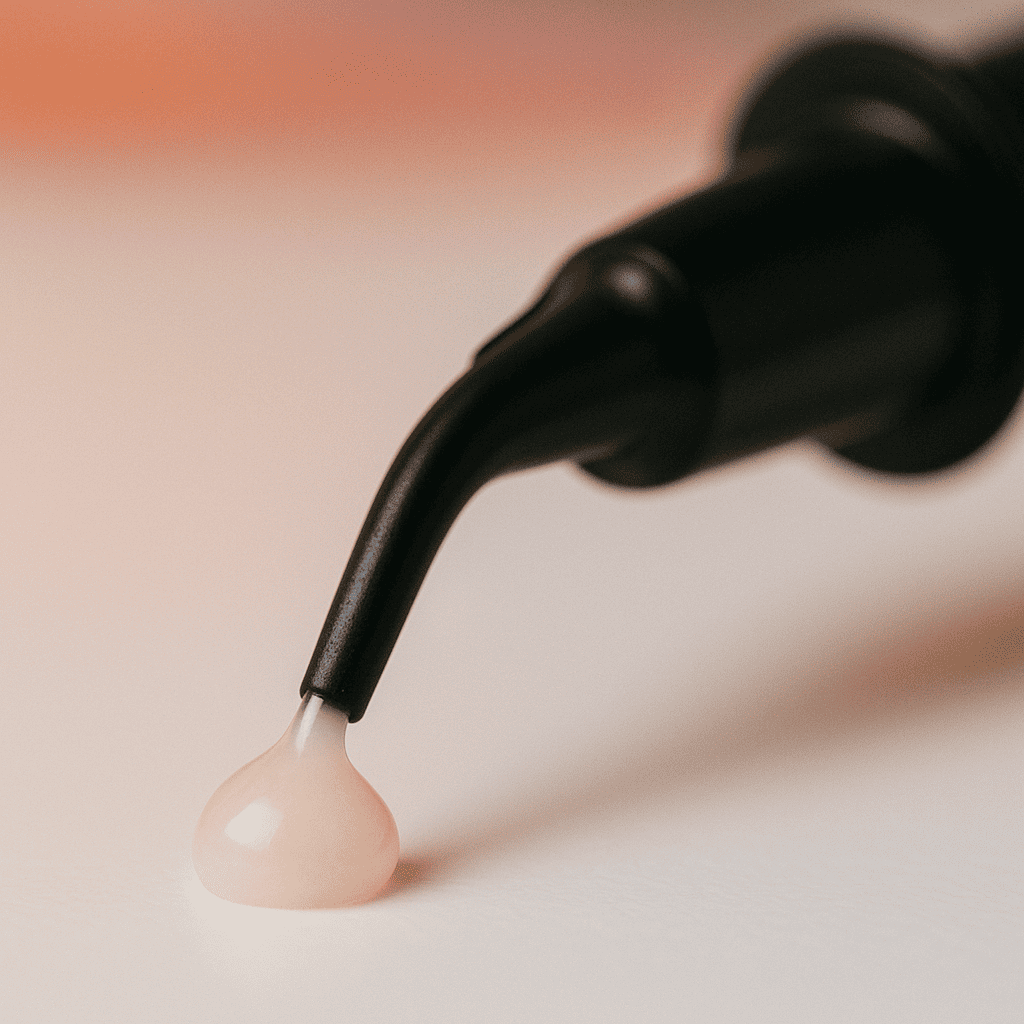
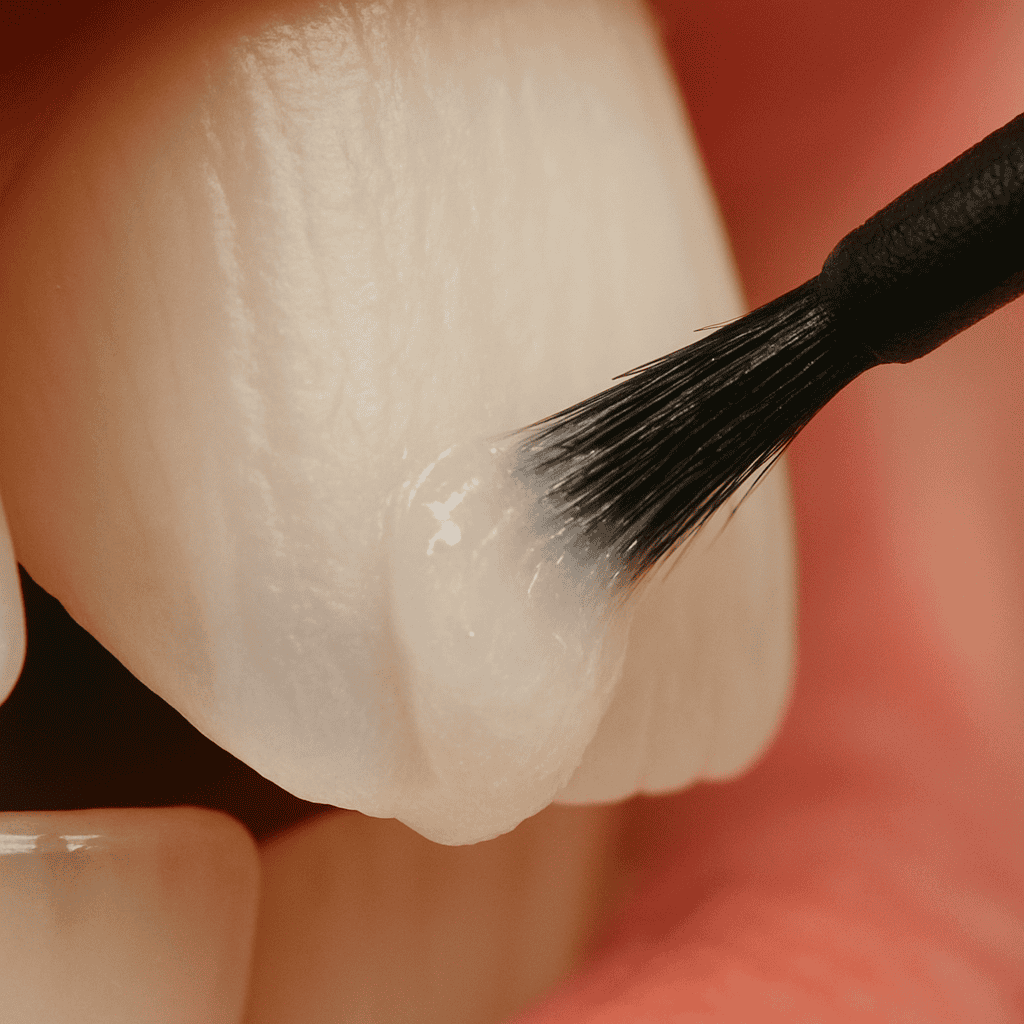
Tooth-coloured composite is applied in thin layers, then shaped to rebuild edges, close gaps or refine contours. Accurate sculpting is what creates the natural transitions that make bonding blend seamlessly with enamel.
Light Curing & Finishing
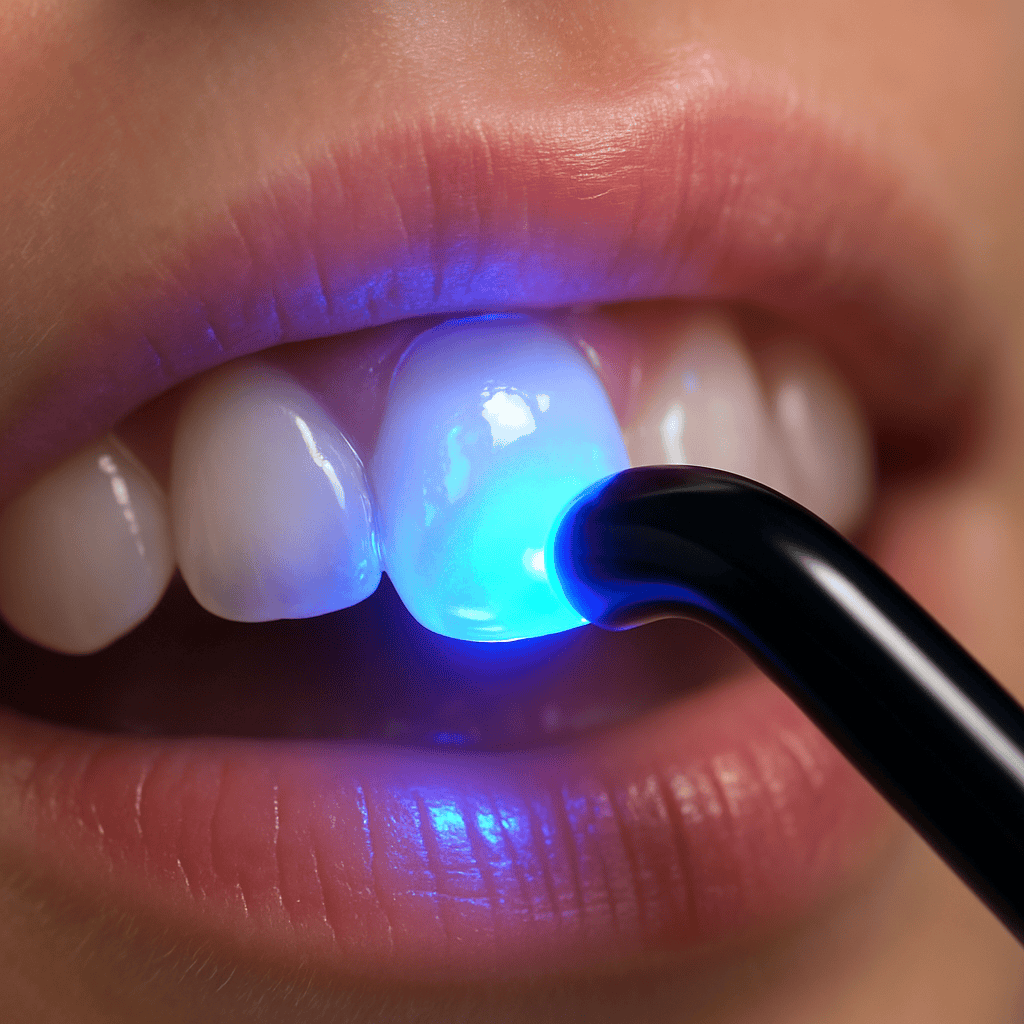
Each layer is cured with blue light to harden the resin. The dentist then refines surface anatomy, creating natural micro-texture for realistic light reflection.
Polishing for Enamel-Like Gloss
Polishing discs and rubber points are used to achieve a smooth enamel-like gloss that matches surrounding teeth. This final step greatly improves aesthetics and stain resistance.
Bite Check & Aftercare Advice
The bite is checked for accuracy and comfort. You’ll receive advice on maintenance, polishing visits and when bonding may need refreshing. For alternative treatments involving more teeth, see the Veneers hub.
Most bonding sessions take 30–90 minutes per tooth depending on complexity. When multiple teeth need a uniform aesthetic design, the visit may be longer.
Composite Bonding vs Veneers — When Each Makes Sense
Composite bonding, composite veneers and porcelain/Emax veneers all upgrade your smile — but each option differs in durability, stain resistance, treatment scope and long-term maintenance. This comparison shows when simple bonding is enough, when composite veneers make sense, and when porcelain or Emax veneers give the longest-lasting aesthetic outcome.
*Longevity varies by bite forces, grinding habits, material quality and maintenance.
Many patients choose bonding for small refinements,
composite veneers for mid-range smile upgrades,
and porcelain/Emax veneers for long-lasting, high-precision transformations.
Longevity, Maintenance & Limitations
Composite bonding is ideal for precise, natural refinements. A quick overview of how long it lasts, how to care for it, and where its limits begin.
Longevity
- Typical lifespan 3–7 years
- Often refreshed, not fully replaced
- Best for small–medium refinements
Maintenance
- Polish every 6–12 months
- Avoid biting hard objects
- Night-guard if you grind
- Dark drinks can slowly stain
Limitations
- Not for major reshaping
- Doesn’t hide deep intrinsic stains
- Less stain-resistant than porcelain
- Not ideal for heavily damaged teeth
Expectations
- Designed for subtle refinements
- Not a full smile makeover
- Can be a step toward veneers later

Not sure if bonding alone is enough? A trusted cosmetic dentist can explain when composite refinements are suitable and when veneers or a broader plan may give more stable long-term results.
Choosing the Right Clinic for Composite Bonding
Composite bonding is technique-sensitive. Small aesthetic changes require precise layering, colour matching, and detailed finishing. LumiQuest guides you toward clinics in Dubai that prioritise natural results, conservative dentistry, and long-term maintenance — not quick fixes.
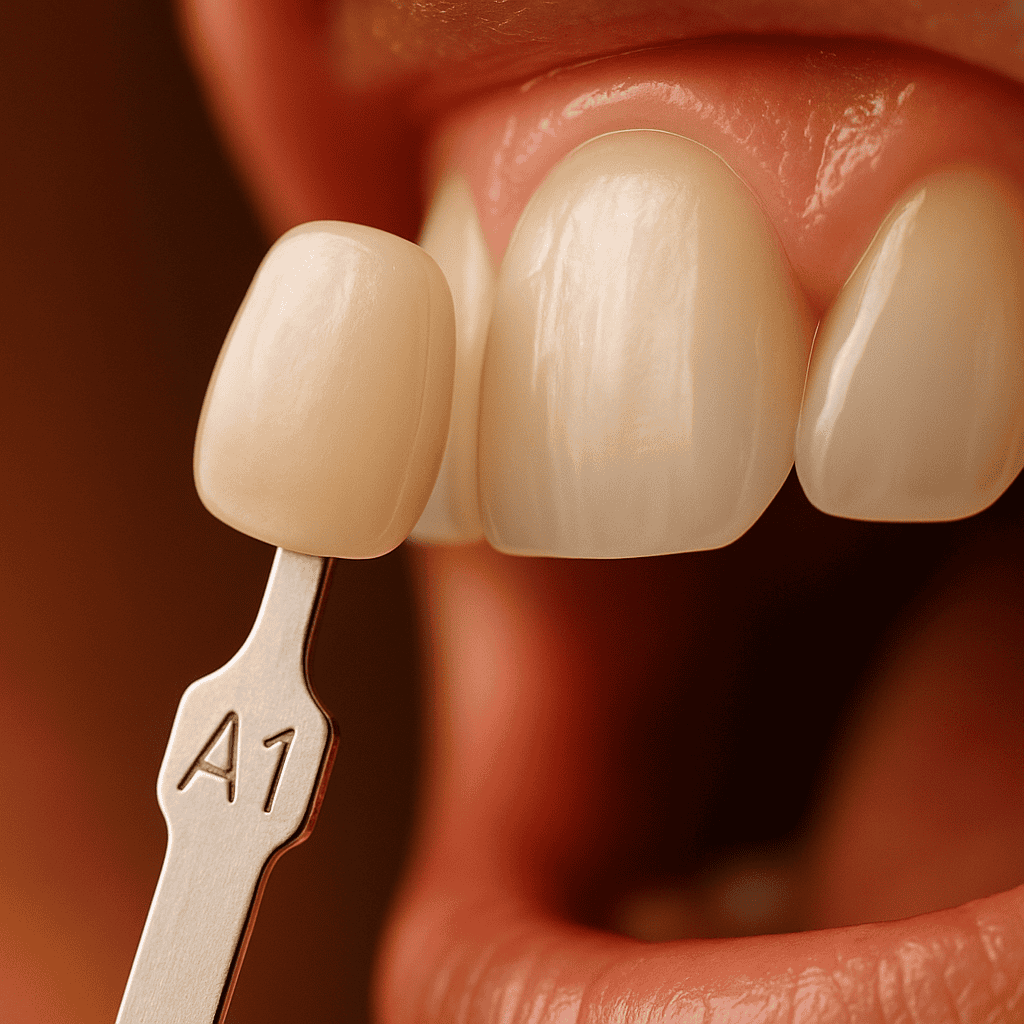
Accurate Shade Matching
Composite looks most natural when shades are layered, not chosen as a single colour. LumiQuest highlights clinics that use multi-layering techniques to match translucency and surface brightness.
Conservative, Minimal-Prep Approach
Composite bonding is meant to preserve enamel. We focus on clinics that prioritise minimal preparation and avoid unnecessary tooth reduction.
Natural Surface Anatomy
A realistic result depends on micro-texture, shape and gloss. Skilled clinicians sculpt subtle vertical and horizontal anatomy so bonding blends smoothly with surrounding teeth.
Predictable Bonding Protocols
Resin longevity depends on technique. LumiQuest favours clinics that use strict etching, isolation and curing protocols for strong, durable adhesion.
Exploring alternatives? See the Veneer Types guide or compare broader aesthetic plans in the Smile Makeover section.
FAQs: Composite Bonding in Dubai
Clear, evidence-based answers to the most common questions about composite bonding — focused on durability, safety, maintenance, and whether it’s the right aesthetic choice for your smile.
Is composite bonding painful?
No — composite bonding is typically pain-free because it rarely requires tooth reduction. Most patients don’t need anaesthetic. Your natural enamel stays intact, and the resin is shaped directly onto the tooth.
How long does composite bonding usually last?
With proper care, bonding typically lasts 3–7 years. Longevity depends on bite forces, polishing frequency, stain exposure, and whether you clench or grind at night.
Does composite bonding stain?
Composite resin can stain more easily than porcelain veneers. Coffee, tea, red wine and smoking may dull the surface over time — but regular 6–12 month polishing helps maintain brightness.
Can bonding fix gaps or uneven teeth?
Yes — bonding is ideal for small gaps, edge symmetry, and minor contour changes. For larger shape changes or cases needing long-term durability, veneers may be more predictable.
Is composite bonding reversible?
In most cases, yes. When bonding is applied with minimal or no tooth preparation, it can be removed or modified without permanently altering the enamel underneath.
Can composite bonding be combined with whitening?
Yes — many patients whiten their teeth first so the bonding can be colour-matched to a brighter shade. Bonding material does not whiten, so whitening is best done before treatment.
When is bonding not recommended?
Bonding is less suitable for major bite changes, full-arch aesthetics, or deep intrinsic stains. In these cases, porcelain or Emax veneers provide stronger, more stable results.
What happens if bonding chips?
Composite can be repaired easily. Minor chips are usually polished or patched during a short visit, making bonding a flexible option for small aesthetic improvements.
What is LumiQuest?
LumiQuest is an independent dental trust platform — guiding patients in Dubai toward trusted clinics for veneers, bonding, smile makeovers, crowns, and other cosmetic treatments with clarity and confidence.

Your Interests First
No ads. No paid placements. LumiQuest’s guidance is shaped entirely around patient needs — not clinic marketing.

Carefully Selected Clinics
Clinics are introduced based on transparent standards, ethical conduct, and consistent patient experiences over time.

A Circle of Trust
LumiQuest guides patients toward dentists who align with its patient-first principles — helping you make informed, confident decisions.
✔ Guidance grounded in safety, ethics, and real-world signals — in Dubai
Your smile deserves clarity, trust, care — and privacy
No ads · No sponsored spots · 100% patient-first · Fully confidential
Find a Trusted Cosmetic Dentist in Dubai
Whether you’re enhancing your smile with veneers, bonding, or crowns, choosing the right clinic shapes your outcome. LumiQuest guides patients toward cosmetic dentists in Dubai who align with its principles of transparency, planning discipline, and ethical care.
Get Clear Guidance to the Right Dentist
Just a couple of minutes — no pressure, no cost, and fully private
One of our advisors will review your request and guide you to a suitable dentist or clinic, usually within 12 hours.