Orthognathic Surgery in Dubai — Corrective Jaw Surgery Explained

Orthognathic (jaw) surgery isn’t just a cosmetic enhancement — it is a medically planned procedure to correct jaw misalignment, bite dysfunction and facial imbalance when orthodontics alone is not enough.

LumiQuest focuses on clear explanations and coordinated planning. We help patients understand when jaw surgery is appropriate, how orthodontics and surgery work together, and what to expect before, during and after treatment — within the broader context of dental care in Dubai and orthodontic treatment.

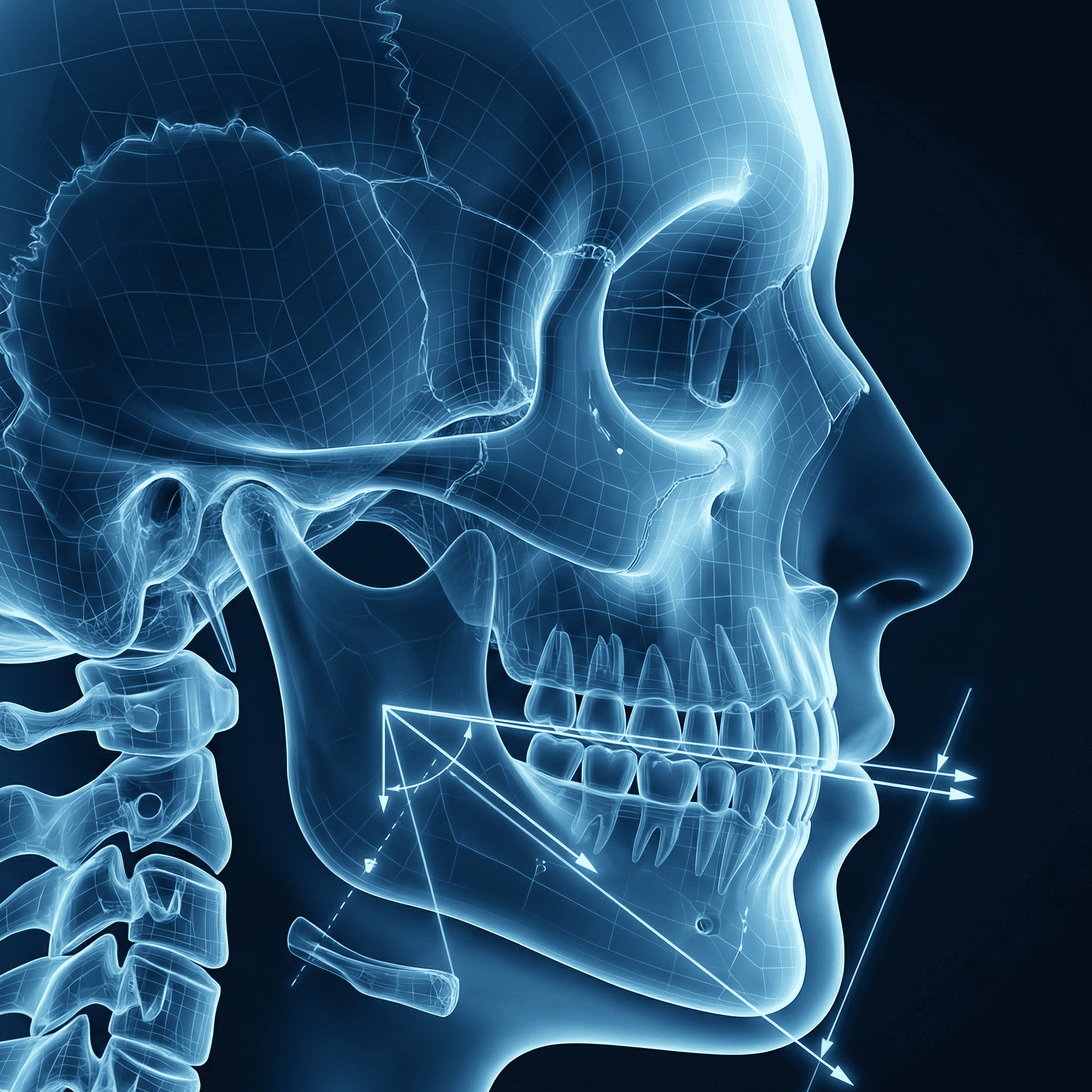
Photorealistic medical illustration showing a side-profile skull with jaw alignment measurements and directional planning lines, illustrating orthognathic (corrective jaw) surgery planning and skeletal repositioning for bite correction.

What Orthognathic Surgery Treats

Orthognathic (corrective jaw) surgery is designed for skeletal jaw misalignment — not minor bite tweaks. The goal is to improve function (bite, chewing, speech, breathing) and create a stable foundation for long-term orthodontic results.

🦷

Severe Bite Problems

Significant overbite, underbite, open bite, or crossbite caused by jaw position — not just tooth alignment.

If braces alone can’t place the bite into a stable relationship, surgery may be part of the plan.

⚖️

Jaw Asymmetry

Noticeable facial or jaw asymmetry where the lower jaw shifts, midlines don’t match, or one side grows differently.

The goal is stability and balance — not “perfect symmetry.”

🍽️

Chewing & Functional Difficulty

Difficulty biting into foods, tearing, or chewing efficiently because the jaws don’t meet correctly.

Function is often the most important reason patients proceed.

🗣️

Speech or Lip Closure Strain

Some jaw patterns can contribute to speech challenges or strain with lip closure at rest.

Assessment is individual — not every speech concern is jaw-driven.

🧩

Orthodontic “Limits”

Cases where orthodontics can align teeth but cannot correct the skeletal base without compromising stability or gum support.

This is where coordinated ortho–surgical planning matters most.

🦴

Jaw Discrepancy & Long-Term Stability

When the jaw relationship creates ongoing stress on teeth, restorations, or the bite — surgery can provide a more stable platform.

Stability is a health outcome — not just aesthetics.

A simple way to think about it: braces move teeth, while orthognathic surgery repositions the jaws when the skeletal foundation is the real issue.

Orthodontics and Orthognathic Surgery — How They Work Together

Corrective jaw surgery is rarely a standalone treatment. It is part of a coordinated orthodontic–surgical plan designed to align the jaws first — then fine-tune the bite and teeth for long-term stability.

1

Orthodontic Preparation

Braces or aligners are used to decompensate the teeth — placing them in their correct position relative to the jaw, even if the bite looks worse temporarily.

This step ensures the jaws can be repositioned accurately during surgery.

2

Surgical Jaw Correction

The oral & maxillofacial surgeon repositions the upper jaw, lower jaw, or both, based on 3D planning and surgical guides.

The goal is skeletal balance, airway function and bite harmony — not cosmetic exaggeration.

3

Post-Surgical Orthodontic Refinement

After healing begins, orthodontics fine-tunes tooth contacts, closes small spaces and ensures a stable, comfortable bite.

This phase protects the surgical result long term.

What to Expect Before, During, and After Surgery

Orthognathic surgery is a planned, phased process — not a single-day event. Understanding what happens at each stage helps set realistic expectations and reduces anxiety around recovery.

Before Surgery — Planning & Preparation

Preparation usually begins months in advance with coordinated orthodontic care, diagnostic imaging and surgical planning.

  • Orthodontic alignment to prepare the bite
  • Clinical exams, scans and facial analysis
  • 3D surgical planning and bite simulations
  • Clear discussion of risks, recovery and limitations

This stage determines surgical accuracy and long-term stability.

During Surgery — Corrective Jaw Procedure

Surgery is performed under general anaesthesia by an oral and maxillofacial surgeon in a hospital setting.

  • Upper jaw, lower jaw, or both are repositioned
  • Fixation with plates and screws for stability
  • No external scars in most cases

Surgical time varies depending on complexity and number of jaws involved.

Early Recovery — First Weeks

Swelling, tightness and fatigue are expected early on. Most patients focus on rest, nutrition and healing.

  • Swelling peaks in the first 7–10 days
  • Soft or liquid diet initially
  • Temporary speech and chewing changes

Close follow-up helps monitor healing and comfort.

Later Recovery — Refinement & Stability

As swelling settles, orthodontic treatment resumes to refine the bite and stabilise the result.

  • Gradual return to normal eating
  • Ongoing orthodontic adjustments
  • Functional improvement becomes noticeable

Final outcomes continue to evolve over several months.

Recovery is progressive, not instant. Most patients report that understanding the timeline in advance makes the experience far more manageable.

Risks, Recovery & Long-Term Outcomes

Orthognathic surgery is a major but well-established procedure. Understanding realistic risks, recovery patterns and long-term expectations helps you make an informed, grounded decision — not a rushed one.

⚠️

Understanding Surgical Risks

As with any major surgery, risks can include infection, bleeding, nerve sensitivity changes or delayed healing. These are discussed carefully during planning.

Careful case selection and experienced surgical teams reduce risk significantly.

Recovery Is Gradual

Initial swelling and stiffness are expected, especially in the first weeks. Visible recovery comes first; full functional adaptation follows more slowly.

Healing timelines vary — patience is part of the process.

🦷

Temporary Sensation Changes

Some patients experience temporary numbness or altered sensation, particularly in the lips or chin.

Sensation often improves gradually as nerves recover.

📐

Long-Term Stability

When surgery and orthodontics are planned together, outcomes are generally stable and predictable.

Retainers, follow-up visits and bite monitoring protect results long-term.

Orthognathic surgery is recommended only when benefits clearly outweigh risks. A multidisciplinary plan — involving both orthodontist and maxillofacial surgeon — is essential for safe recovery and lasting function.

FAQs: Orthognathic Surgery in Dubai

Clear answers to the most common questions about corrective jaw surgery — including candidacy, orthodontic preparation, recovery and long-term outcomes.

What is orthognathic (jaw) surgery?

Orthognathic surgery is a planned surgical repositioning of the jaws to correct skeletal bite problems that cannot be fixed with orthodontics alone. It aims to restore function, stability and proper jaw alignment.

Who is a candidate for corrective jaw surgery?

Candidates are adults with significant jaw misalignment, unstable bite, facial asymmetry, breathing concerns or functional problems where orthodontic treatment alone would be insufficient.

Is orthognathic surgery cosmetic or functional?

It is primarily a functional procedure. While some patients are motivated by facial appearance, orthognathic surgery is recommended based on functional needs such as bite alignment, comfort, airway support and long-term stability. Changes in facial balance are a common secondary outcome — not the primary indication.

Are braces required before or after jaw surgery?

Yes. Orthodontics is typically required before and after surgery to position teeth correctly and refine the bite once the jaws are aligned.

How long does recovery from jaw surgery take?

Initial recovery takes weeks, while full adaptation develops over months. Swelling reduces gradually, and function improves steadily with follow-up care.

What risks are involved in orthognathic surgery?

Risks may include infection, bleeding or temporary sensation changes. Careful planning and experienced surgical teams help keep risks controlled and outcomes predictable.

When should I see an oral and maxillofacial surgeon?

When orthodontic assessment suggests the bite cannot be stabilised without surgery. Evaluation by an oral and maxillofacial surgeon confirms whether surgery is appropriate.

What is LumiQuest?

LumiQuest is an independent patient guide that helps you navigate complex dental and jaw-related procedures in Dubai — including orthognathic (corrective jaw) surgery. Our role is to support informed decisions when treatment involves long-term planning, surgical coordination and meaningful recovery.

No ads or sponsored listings for jaw surgery and orthodontic care in Dubai

No Ads. No Surgical Promotion.

LumiQuest does not accept paid listings, referrals or surgical promotions. Guidance is based on clinical judgment, multidisciplinary coordination and patient safety — not marketing visibility.

Vetted oral and maxillofacial surgeons and orthodontic teams in Dubai

Multidisciplinary Teams, Carefully Vetted

Orthognathic surgery requires coordination between oral & maxillofacial surgeons and orthodontists. LumiQuest screens providers for experience, planning discipline, transparency and responsible case selection.

Trusted private network for corrective jaw surgery and orthodontic care in Dubai

A Private Circle of Surgical Trust

Only teams that consistently demonstrate ethical recommendations, realistic expectations and patient-first care remain within the LumiQuest circle. The focus is on safe recovery, functional stability and long-term outcomes — not volume or speed.

Find My Dentist

Guidance grounded in safety, ethics, and real-world signals — in Dubai

Your smile deserves clarity, trust, care — and privacy
No ads · No sponsored spots · 100% patient-first · Fully confidential

Guidance You Can Trust for Corrective Jaw Surgery in Dubai

When treatment involves orthognathic (corrective jaw) surgery, choosing the right team is critical. LumiQuest provides independent, patient-first guidance to carefully vetted orthodontic and surgical teams in Dubai — focused on clear planning, ethical recommendations and long-term functional stability, without pressure, promotion or rushed decisions.

Get Clear Guidance to the Right Dentist

Just a couple of minutes — no pressure, no cost, and fully private
One of our advisors will review your request and guide you to a suitable dentist or clinic, usually within 12 hours.

Type your country (e.g., “United Arab Emirates”) or its code (e.g., “+971”), then your number without the area code. WhatsApp only.
Please enter a valid phone number.
Advanced Options (optional)
JPG, JPEG, PNG, PDF, HEIC, WEBP (max 10MB each)

Maintained by: LumiQuest Dental Circle